
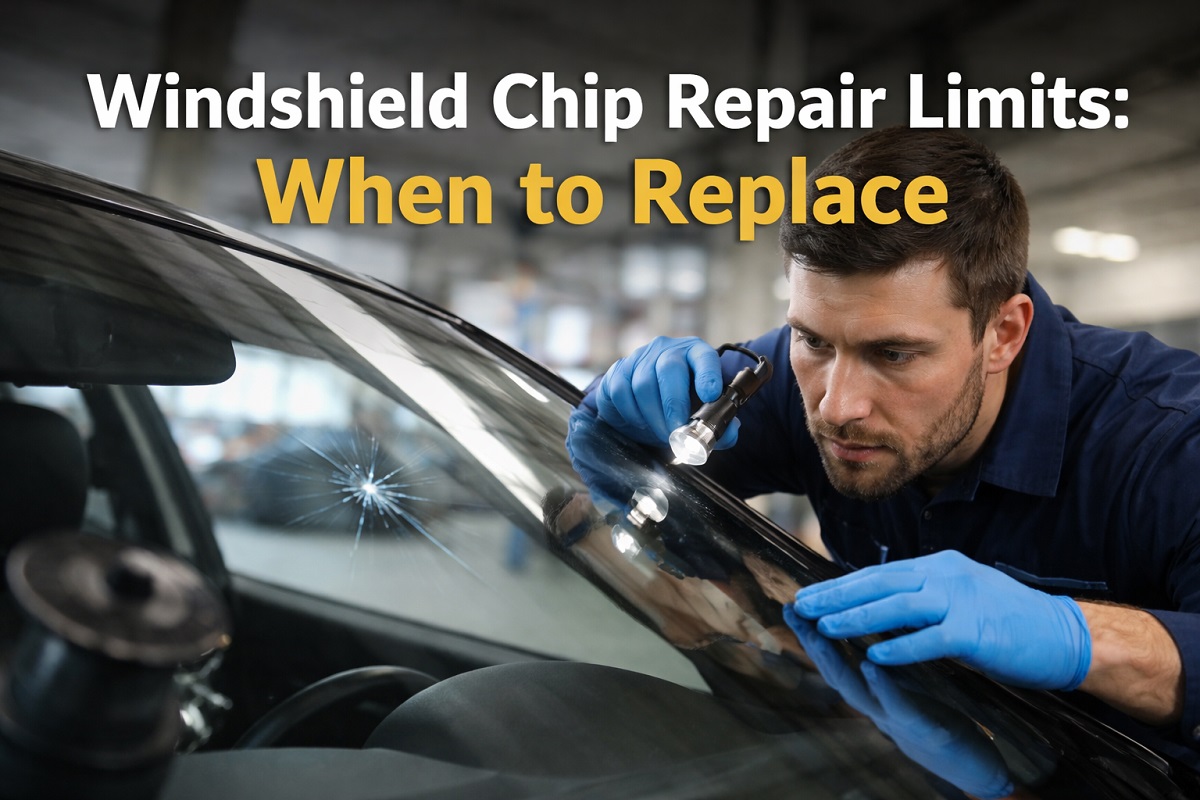
Windshield chip repair limits determine whether damaged auto glass can be safely repaired or if a full windshield replacement is necessary. Small chips and cracks are common from road debris, but not every type of damage can be restored through repair. Understanding the limits of windshield chip repair helps drivers make informed decisions that maintain vehicle safety, visibility, and structural integrity.
Windshield damage may appear minor at first, yet certain factors quickly push it beyond repairable conditions. The size, location, depth, and pattern of the chip all influence whether repair is possible. Recognizing these limits helps prevent worsening cracks, costly replacements, and potential safety risks while driving.
Size Limits for Windshield Chip Repair
One of the primary factors that determines repairability is the size of the chip or crack. Most auto glass repair specialists follow industry guidelines that define the maximum damage size that can be safely repaired.
Typical Repairable Chip Sizes
In general, windshield chip repair works best when damage falls within these size ranges:
- Bullseye chips: up to about 1 inch in diameter
- Star breaks: up to 3 inches across
- Combination breaks: often repairable if under 2 inches
- Short cracks: typically less than 6 inches long
Once damage exceeds these limits, the structural stability of the windshield may be compromised. Larger cracks often continue spreading even after repair, making replacement the safer solution.
Why Larger Damage Is Difficult to Repair
Windshield repair works by injecting resin into the damaged glass layers. When the damaged area becomes too large, the resin cannot fully stabilize the structure. Larger cracks also weaken the laminated layers of the windshield, which reduces the effectiveness of repairs.
Drivers should schedule repairs quickly after a chip appears. Even a small rock chip can expand from temperature changes, road vibration, or moisture infiltration.
Location of the Chip on the Windshield
Where the chip occurs on the windshield is just as important as its size. Certain areas of the windshield cannot be safely repaired because they directly affect driver visibility or vehicle safety systems.
Damage in the Driver’s Line of Sight
Chips located in the driver’s direct viewing area often require windshield replacement even if the damage is small. Repair resin can slightly distort the glass, which may cause glare or visual distortion.
For this reason, technicians usually recommend replacement when damage appears directly in front of the driver.
Chips Near the Windshield Edge
Damage near the edge of the windshield is another common reason replacement becomes necessary. Chips located within a few inches of the edge weaken the structural frame of the glass.
Edge damage increases the risk of:
- Crack spreading across the windshield
- Reduced windshield strength during a collision
- Improper sealing during repair
Because the windshield contributes to roof support and airbag deployment, maintaining its structural integrity is critical.
Areas Near Sensors and Cameras
Many modern vehicles contain advanced driver assistance systems mounted near the windshield. These systems may include:
- Lane departure cameras
- Rain sensors
- Forward collision cameras
- Automatic braking sensors
Damage in these areas often requires full windshield replacement so the system can be recalibrated properly.
Depth of Windshield Damage
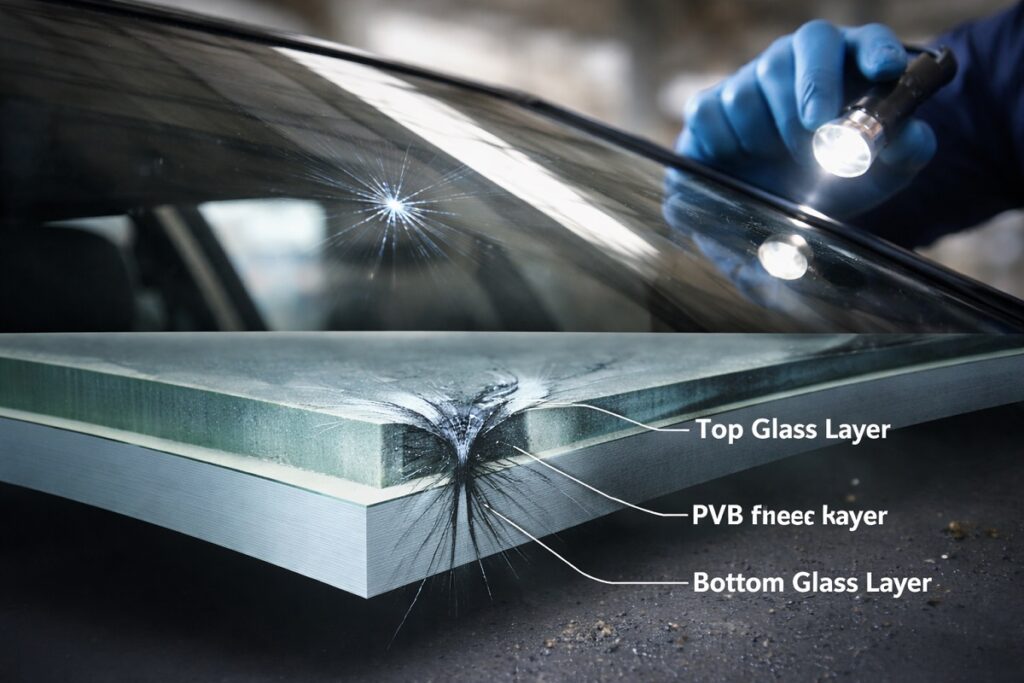
Windshields are made from laminated glass consisting of two layers with a plastic interlayer. Repair limits also depend on how deeply the chip penetrates the glass layers.
Surface Layer Damage
When a rock chip affects only the outer layer of glass, repair is usually possible. Resin fills the damaged area and bonds with the surrounding glass, restoring clarity and strength.
These repairs are often quick and prevent further spreading.
Penetration Through Multiple Layers
If the damage penetrates deeper into the laminated structure, repair becomes far less reliable. Deep cracks weaken the internal bonding between layers.
Signs that the chip may be too deep for repair include:
- Visible damage on both sides of the glass
- Moisture trapped inside the chip
- Rough edges or glass flaking inside the crack
When these conditions occur, windshield replacement is typically recommended.
Types of Windshield Chips and Their Repair Limits
Different chip patterns affect how well repair resin can stabilize the damage. Some patterns respond well to repair, while others tend to spread quickly.
Common Repairable Chip Types
Certain chip patterns are usually good candidates for repair:
- Bullseye chips: circular damage from a direct rock impact
- Half moon chips: partial circular breaks
- Star breaks: cracks radiating from the impact point
- Small combination breaks: multiple short cracks near a central chip
These damage types allow resin to flow evenly into the break and stabilize the glass.
Chip Patterns That Often Require Replacement
Some chip patterns exceed repair limits due to their complexity or spreading cracks.
Examples include:
- Long cracks extending across the windshield
- Multiple impact points close together
- Spiderweb cracks covering a wide area
- Damage intersecting previous repairs
When damage spreads across multiple stress lines in the glass, repair may only provide temporary improvement.
Time Matters After a Chip Appears
Delaying windshield chip repair increases the chance that the damage will exceed repair limits. Environmental factors play a significant role in how quickly chips expand.
Factors That Cause Chips to Spread
Several conditions cause windshield chips to grow into cracks:
- Rapid temperature changes from hot to cold
- Moisture entering the damaged area
- Road vibrations from daily driving
- Direct sunlight heating the glass
Once dirt or water contaminates the chip, it becomes more difficult for repair resin to bond properly.
Early Repair Improves Success Rates
Repairing chips shortly after they occur significantly increases the likelihood that the damage will stay within repairable limits.
Prompt repair offers several advantages:
- Prevents crack expansion
- Restores windshield strength
- Maintains clear visibility
- Avoids the cost of replacement
A quick repair appointment often takes less than an hour and can extend the life of the windshield.
When Windshield Replacement Is the Better Option

Even though chip repair is often effective, there are situations where replacement provides the safest and most reliable solution.
Situations That Typically Require Replacement
Auto glass professionals usually recommend replacement when:
- Cracks exceed six inches
- Damage reaches the windshield edge
- Chips are located in the driver’s line of sight
- Multiple cracks spread across the glass
- The windshield has previous repairs nearby
Replacing the windshield ensures the glass regains full structural strength and optical clarity.
Safety Considerations
The windshield plays a major role in vehicle safety. It helps support the roof structure and assists with proper airbag deployment during accidents.
If extensive damage weakens the glass, the windshield may fail during a collision. Replacement restores the windshield to factory safety standards.
Preventing Chips From Reaching Repair Limits
Drivers cannot always avoid road debris, but certain habits can reduce the risk of windshield damage expanding beyond repairable limits.
Driving Practices That Help Protect Windshields
Maintaining safe driving habits can limit damage from rocks and debris.
Helpful practices include:
- Keeping a safe following distance from trucks and construction vehicles
- Avoiding gravel roads when possible
- Slowing down in areas with loose road debris
- Replacing worn windshield wipers that may scratch damaged glass
Protecting a Newly Damaged Windshield
When a chip first appears, taking temporary precautions can slow further damage.
Drivers can:
- Cover the chip with clear tape to block moisture
- Avoid car washes until repair is completed
- Park in shaded areas during extreme heat
- Schedule repair as soon as possible
These simple steps can prevent the chip from spreading before a technician can repair it.
Cost Differences Between Repair and Replacement
Understanding windshield chip repair limits can also help drivers save money. Repair is significantly less expensive than replacement when the damage qualifies.
Average Cost Comparison
While prices vary by vehicle type and location, general cost differences include:
- Chip repair: usually $60 to $150
- Windshield replacement: often $250 to $1,000 or more
Vehicles with advanced safety systems may have higher replacement costs due to camera recalibration.
Insurance Coverage
Many insurance policies cover windshield chip repair at little or no cost to the driver. Some policies waive deductibles for repair because fixing small chips prevents larger claims later.
Checking insurance coverage can help drivers take advantage of affordable repairs before damage spreads.
Professional Inspection Is Always Recommended

Even when damage appears small, professional inspection ensures the correct repair decision is made. Technicians evaluate several factors that are difficult to assess without specialized tools.
They examine:
- Crack length and direction
- Internal glass stress patterns
- Depth of the damage
- Location relative to structural zones
This evaluation helps determine whether repair will provide a long lasting solution or if replacement is necessary for safety.
Windshield chip repair limits provide clear guidelines for determining when repair is possible and when replacement becomes the safer option. Acting quickly after a chip appears, understanding the size and location limits, and consulting a professional technician helps maintain clear visibility and strong windshield protection while driving.
Content reviewed and published by SLP AutoGlass Editorial Team.