
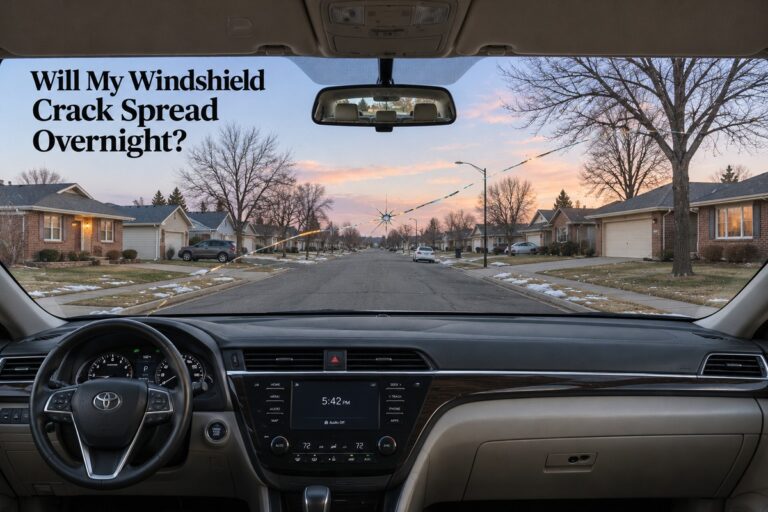
Will my windshield crack spread overnight? It can, and the odds go up quickly when the crack is long, sits near the edge of the glass, or the temperature changes sharply after dark. A small chip might stay put for weeks, while a crack that looks harmless at 6 p.m. can stretch across the driver’s view by morning. Knowing what makes a crack grow helps you decide whether to repair it now or risk a full replacement later.
What Makes a Windshield Crack Spread Overnight
Temperature swings are the biggest trigger
Glass expands when it warms and contracts when it cools. A crack creates a weak point, and every temperature change puts stress on it. Overnight, outdoor temperatures can drop 20 to 40 degrees in many climates, and that is often enough to push a crack further.
Frost makes it worse. Water can seep into the crack, freeze, and expand, which pries the glass apart from the inside.
Cracks reach the edge of the glass faster
A crack that starts within a couple of inches of the windshield edge is much more likely to spread. The outer edge of the glass carries more stress because it is bonded to the vehicle frame. Once a crack reaches the edge, it tends to run quickly.
Windshield construction matters
Your windshield is laminated glass, made of two layers of glass bonded to a clear plastic interlayer. The plastic keeps the glass together on impact, but it doesn’t stop a crack in the outer layer from growing. Most chips and cracks start in the outer layer and spread from there.
How Fast Different Types of Damage Spread
Chips and bullseyes
Small chips, such as bullseyes and star breaks, usually spread slowest. Many stay the same size for weeks if they are not stressed. They can still turn into long cracks after one hard temperature change, a pothole, or a slammed door.
Short cracks
A crack under about 6 inches may stay stable for a short time, but it can grow without warning. Short cracks are often repairable, and this is the best window to act.
Long cracks and stress cracks
Cracks longer than about 12 inches rarely stay put. Stress cracks, which form without an impact, often start at the edge and are usually caused by heat, cold, or pressure on the glass. They tend to grow steadily and are rarely repairable once they pass a certain length.
Everyday Situations That Cause Overnight Spread
Hot defrosters on cold glass
Blasting the defroster on a frozen windshield is one of the most common ways a crack spreads. The inside heats quickly while the outside stays frozen, and that uneven stress can send a crack across the glass in seconds.
Warm the car gradually and use a low fan setting first. Avoid pouring hot water on the glass.
Parking in direct sun, then cooling down
A windshield baking in afternoon sun and then cooling in the evening goes through a significant temperature swing. If you already have a chip, this daily cycle can slowly widen it.
Car washes and pressure washing
High-pressure water and hot water on a cold windshield can add stress to damaged glass. If your windshield is already chipped or cracked, a hand wash with lukewarm water is safer.
Bumpy roads and closing doors
Vibration from rough roads and the air pressure change from slamming a door can both stress a weak spot. Closing the doors gently, or cracking a window first, helps when your glass is already damaged.
What to Do Right After You Notice a Chip or Crack
Take immediate steps to stop the damage from growing
- Cover the chip with clear tape to keep out dirt and moisture
- Park in a garage or shaded area when possible
- Avoid extreme temperature changes inside the car
- Skip the car wash until it is fixed
- Drive gently and avoid potholes
Do not use household glue
Superglue and similar products can contaminate the chip, and a professional resin repair may then not bond properly. Clear tape is a better temporary option.
Schedule an inspection quickly
The sooner a chip is evaluated, the better the chance it can be repaired instead of replaced. Waiting a few days can be the difference between a quick repair and a new windshield.
Windshield Repair vs. Replacement
When repair is usually possible
Repair is generally an option when:
- The chip is smaller than a quarter
- The crack is shorter than about 6 inches
- The damage is not directly in the driver’s line of sight
- The damage has not reached the edge of the glass
A resin repair typically takes around 30 minutes and restores much of the glass’s strength while improving clarity.
When replacement is the safer choice
Replacement is usually recommended when the crack is long, spreads to the edge, has multiple damage points, or sits in the driver’s field of view. Deep damage that reaches the inner layer of glass also calls for replacement.
Cost and insurance considerations
Repair is usually far cheaper than replacement, and many insurance policies cover chip repair with little or no out-of-pocket cost. Windshield replacement costs vary by vehicle, and newer models with built-in cameras and sensors may need driver assistance system recalibration, which adds to the cost. Check your policy, since glass coverage differs by provider and state.
Why Waiting Is Risky
Safety is affected
The windshield does more than block wind. It supports the roof in a rollover, and it helps the passenger airbag deploy correctly. Many sources estimate it provides around 30% of a vehicle’s structural strength in a rollover. A cracked windshield may not perform as designed in a crash.
Visibility and legal issues
Cracks in the driver’s line of sight can distort your view, especially with glare from the sun or oncoming headlights. Some states and inspection programs can fail or ticket a vehicle with cracks in certain areas of the windshield.
Small problems get expensive
A $0 to $100 chip repair can become a several-hundred-dollar replacement if the crack spreads. The added cost of sensor recalibration on modern vehicles can push the total higher.
How to Prevent Windshield Cracks From Spreading
Control the temperature around your glass
Keep your vehicle in a garage when possible, use a windshield cover in winter, and use a sunshade in summer. Gradual temperature changes are easier on damaged glass.
Keep your distance on the road
Gravel and debris thrown by other vehicles cause many chips. Leaving extra space behind trucks, especially on gravel roads or construction zones, reduces your risk.
Fix chips as soon as they happen
Even a tiny chip is worth addressing early. Repairing it quickly keeps dirt and moisture out and stops it from becoming a long crack.
A cracked windshield rarely gets better on its own, and an overnight temperature drop can turn a minor chip into a full replacement. If you have damage right now, SLP Auto Glass can inspect it, tell you whether repair is an option, and get you back on the road with a clear, safe windshield.