
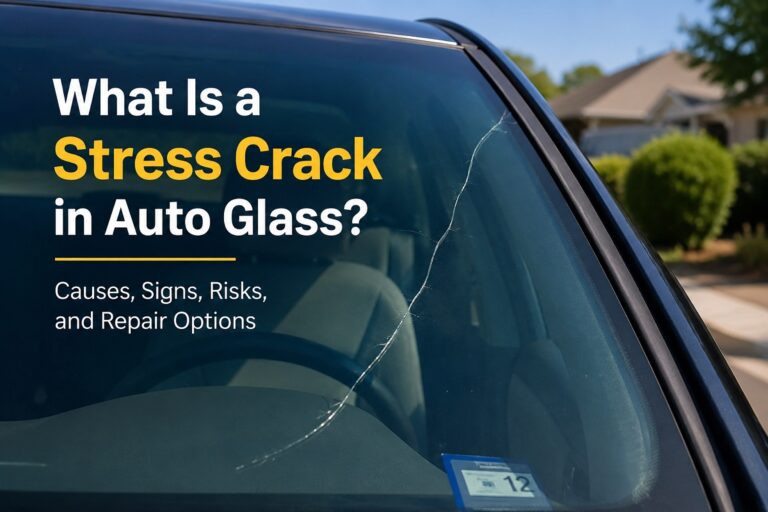
A stress crack in auto glass is one of the most frustrating types of windshield damage because it can appear without any direct impact. Drivers often notice a long crack spreading across the windshield or side window even though no rock, debris, or collision caused visible damage. These cracks can quickly worsen, affecting visibility, safety, and the structural integrity of the vehicle.
Unlike chips caused by road debris, stress cracks develop due to pressure, temperature changes, glass defects, or installation problems. Understanding how these cracks form and what causes them can help vehicle owners prevent expensive windshield replacement and maintain safer driving conditions.
How Stress Cracks Form in Auto Glass
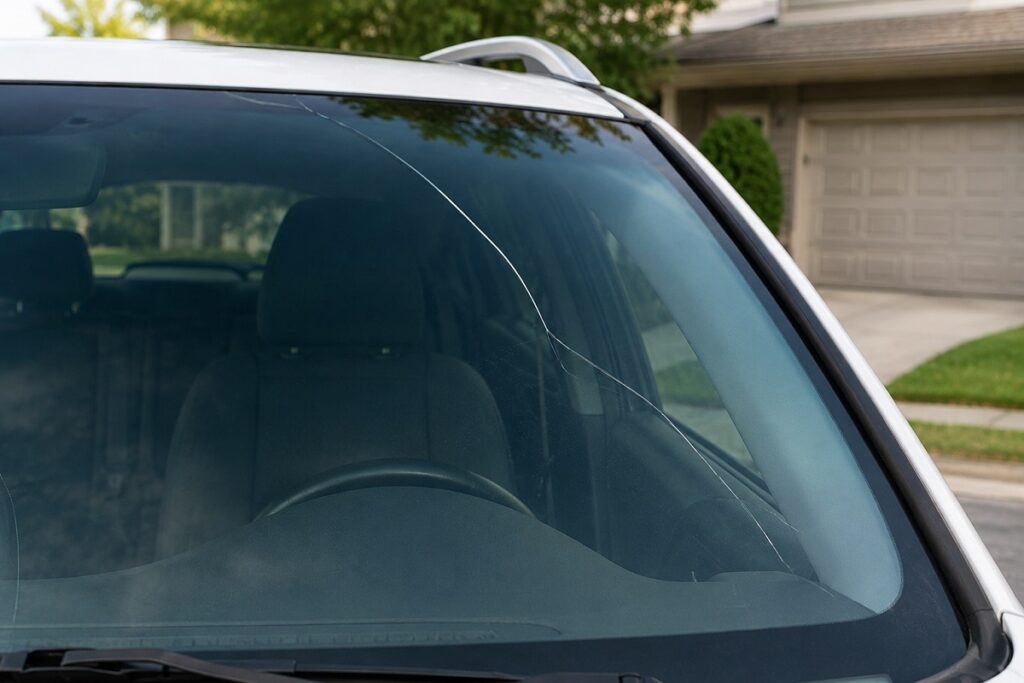
Auto glass constantly expands and contracts due to environmental conditions. Windshields are designed to handle normal pressure, but excessive stress can weaken the glass over time.
Stress cracks often begin at the edge of the windshield because this area experiences the highest amount of pressure. Once the glass becomes compromised, a crack may spread rapidly across the surface.
Several factors can contribute to the formation of stress cracks, including:
- Rapid temperature changes
- Poor windshield installation
- Manufacturing defects
- Vehicle frame pressure
- Structural twisting during driving
- Existing minor glass weaknesses
In many cases, drivers do not notice the beginning of the crack until it has already expanded several inches.
Common Causes of Stress Cracks in Windshields
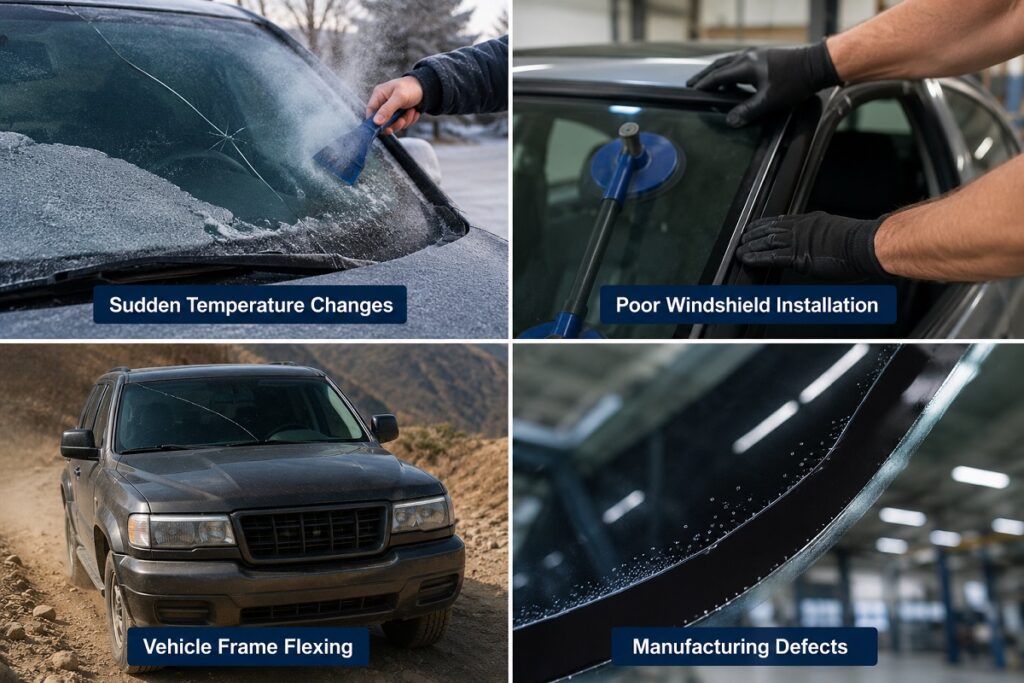
Sudden Temperature Changes
Extreme temperature fluctuations are one of the leading causes of windshield stress cracks. Auto glass expands in heat and contracts in cold weather. When this process happens too quickly, the pressure can exceed what the glass can handle.
Examples include:
- Pouring hot water on an icy windshield
- Running the defroster at maximum heat during freezing temperatures
- Parking in direct sunlight after exposure to cold weather
- Blasting cold air conditioning on extremely hot glass
These rapid changes create uneven expansion within the windshield, increasing the likelihood of cracking.
Poor Windshield Installation
Improper windshield installation can place uneven pressure on the glass. If the windshield is not aligned correctly or if low quality adhesive is used, stress points may form around the edges.
Signs of installation related stress include:
- Cracks forming shortly after replacement
- Wind noise around the windshield
- Water leaks near the glass
- Uneven gaps around the windshield frame
Professional auto glass installation is essential for reducing long term stress on the windshield.
Vehicle Frame Flexing
The frame of a vehicle naturally flexes during driving, especially on uneven roads or rough terrain. If the windshield already has weak areas, the movement of the frame can place additional pressure on the glass.
This is more common in:
- Trucks
- SUVs
- Vehicles driven on construction roads
- Cars with prior accident damage
Over time, repeated stress can trigger a crack even without impact.
Manufacturing Defects
Although rare, some windshields contain defects from the manufacturing process. Tiny imperfections in the glass may weaken its durability and make it more vulnerable to cracking under normal conditions.
Defective glass may develop stress cracks shortly after installation, particularly during seasonal weather changes.
Signs of a Stress Crack in Auto Glass
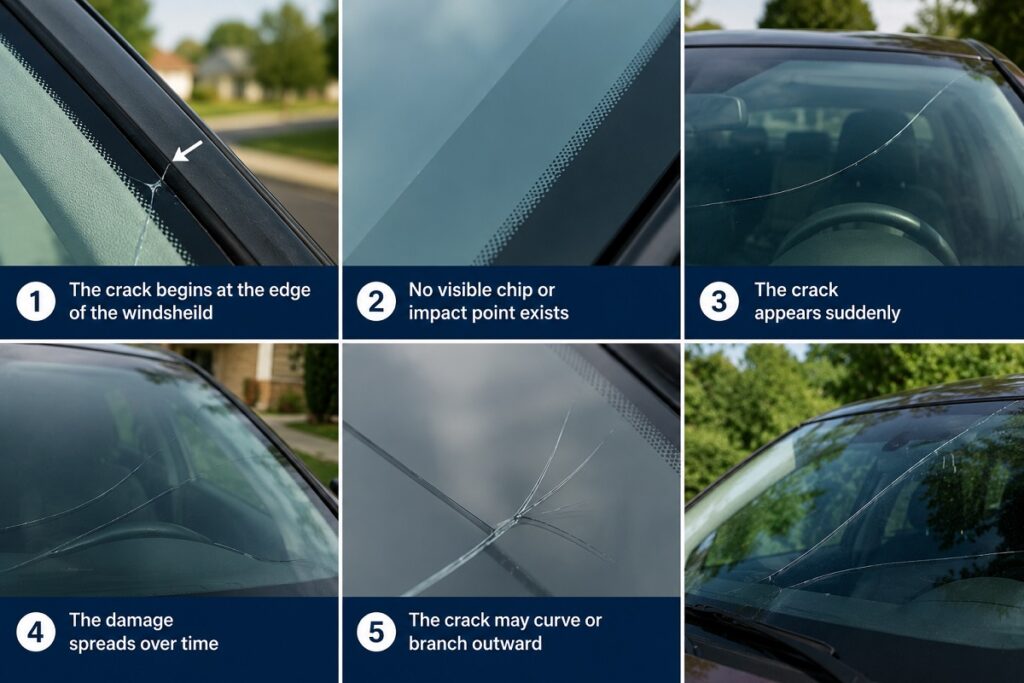
Stress cracks often have distinct characteristics that separate them from impact damage.
Common signs include:
- The crack begins at the edge of the windshield
- No visible chip or impact point exists
- The crack appears suddenly
- The damage spreads over time
- The crack may curve or branch outward
Impact cracks usually show a visible point where debris struck the glass. Stress cracks generally lack this central impact mark.
Why Stress Cracks Spread Quickly
Once a stress crack begins, it can expand rapidly due to continued pressure on the windshield. Driving vibrations, weather conditions, and additional temperature changes can all accelerate the spread.
Several conditions make cracks grow faster:
- Hot daytime temperatures followed by cool nights
- Rough roads and potholes
- High speed driving vibrations
- Continued use of strong defrosters
- Moisture entering the damaged area
Even a small stress crack can eventually stretch across the entire windshield.
Safety Risks of Driving With a Stress Crack
Many drivers delay windshield repair because the crack seems minor at first. However, stress cracks can create serious safety concerns.
Reduced Visibility
A crack in the driver’s line of sight can distort visibility, especially during:
- Night driving
- Rainstorms
- Bright sunlight
- Headlight glare
Poor visibility increases the risk of accidents and unsafe driving conditions.
Weakened Structural Support
The windshield plays an important role in vehicle safety. It helps support the roof during rollover accidents and contributes to airbag deployment performance.
A damaged windshield may not provide proper structural support during a collision.
Increased Risk of Shattering
Stress cracks weaken the integrity of the glass. While laminated windshields are designed to stay together, severe cracks can still increase the chance of dangerous glass failure.
Can a Stress Crack Be Repaired?
Whether a stress crack can be repaired depends on several factors, including its size, location, and severity.
Small cracks may qualify for repair if:
- The crack is short
- The damage is not in the driver’s direct line of sight
- The crack has not reached the edge extensively
- The inner glass layer remains intact
However, many stress cracks require full windshield replacement because they often begin at the edge and spread quickly.
A professional auto glass technician can determine the safest solution.
When Windshield Replacement Is Necessary
Replacement is typically recommended when:
- The crack is longer than a few inches
- Multiple cracks are present
- The damage obstructs visibility
- The crack reaches deep into the glass layers
- The windshield’s structural integrity is compromised
Modern windshield replacement uses high strength adhesives and advanced installation methods designed to restore vehicle safety standards.
How to Prevent Stress Cracks in Auto Glass
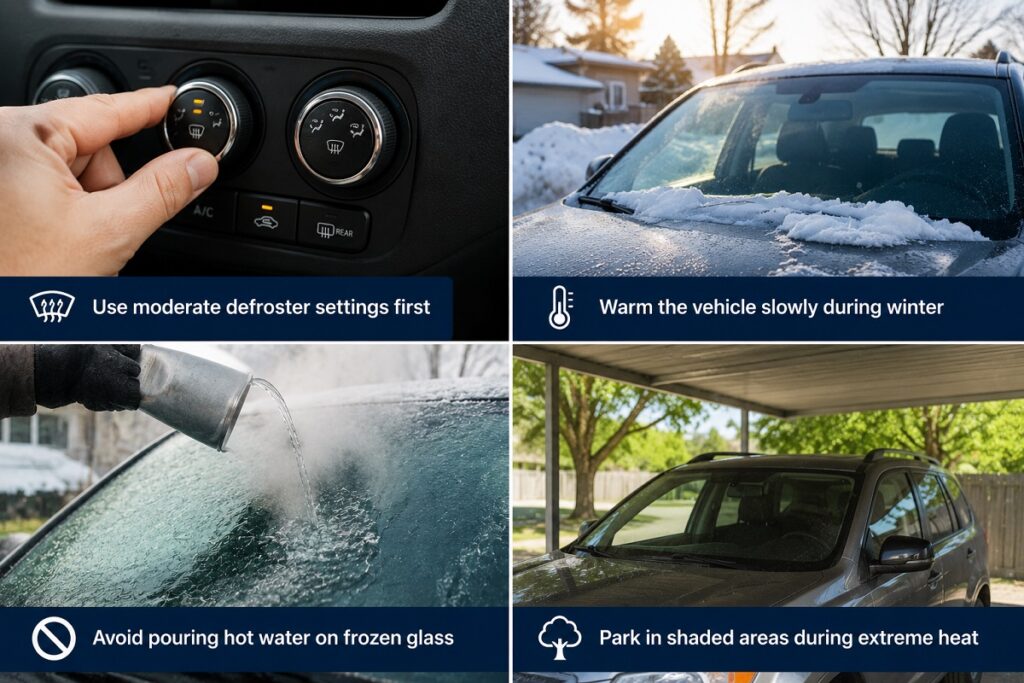
While not all stress cracks can be avoided, drivers can reduce the risk with proper care and maintenance.
Avoid Rapid Temperature Changes
Protect your windshield by allowing gradual temperature adjustments.
Helpful practices include:
- Use moderate defroster settings first
- Warm the vehicle slowly during winter
- Avoid pouring hot water on frozen glass
- Park in shaded areas during extreme heat
Reducing sudden temperature shock helps minimize pressure on the glass.
Repair Small Chips Quickly
Minor chips and scratches can weaken the windshield over time. Prompt repairs help prevent additional stress from spreading through the glass.
Even small imperfections can become larger problems during weather changes.
Choose Professional Auto Glass Installation
Quality installation matters significantly. Certified technicians use proper adhesives, alignment methods, and curing procedures that reduce pressure points on the windshield.
Choosing experienced installers can help prevent future stress crack issues.
Drive Carefully on Rough Roads
Repeated impact from potholes, gravel roads, and uneven terrain can increase stress on the windshield and vehicle frame.
Reducing excessive vibration helps protect the glass from additional pressure.
Weather Conditions That Increase Stress Crack Risk
Certain weather patterns make stress cracks more likely to occur.
Winter Conditions
Cold temperatures create contraction in the glass. Using high heat on a frozen windshield can rapidly expand certain areas while others remain cold.
This uneven expansion creates internal pressure that may trigger cracking.
Summer Heat
Direct sunlight can heat the windshield significantly, especially in darker vehicles. Running cold air conditioning immediately after entering a hot vehicle can create thermal stress.
Parking in garages or shaded locations can reduce exposure to extreme heat.
Insurance Coverage for Stress Cracks
Many comprehensive auto insurance policies include windshield repair or replacement coverage. Coverage details vary by provider and state regulations.
Drivers should review:
- Deductible amounts
- Glass specific coverage
- Full windshield replacement options
- Repair versus replacement policies
Some insurance companies waive deductibles for minor windshield repairs.
Choosing a Reliable Auto Glass Repair Company
Selecting the right auto glass service provider can affect both safety and durability.
Look for companies that offer:
- Certified technicians
- High quality OEM or equivalent glass
- Warranty coverage
- Proper adhesive curing procedures
- Positive customer reviews
A properly installed windshield reduces the chance of future stress related damage.
Content reviewed and published by SLP AutoGlass Editorial Team.