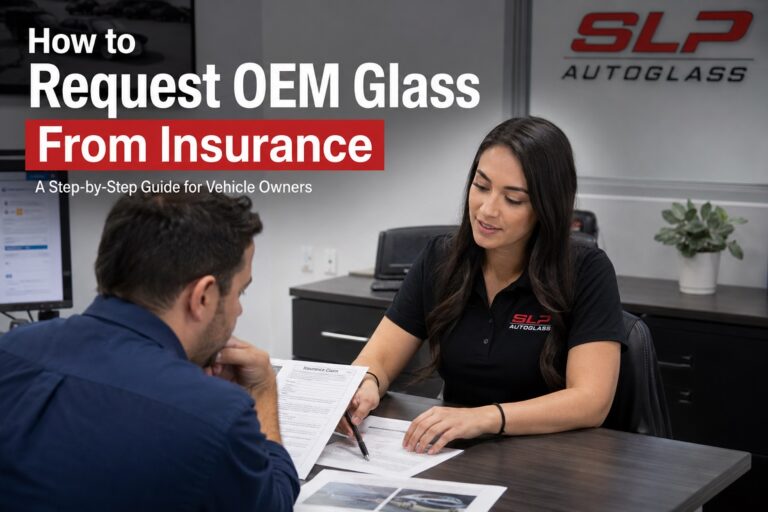
Requesting OEM glass from insurance is an important step if you want your vehicle repaired with glass that matches the manufacturer’s original specifications. While many insurance policies cover windshield replacement or auto glass repair, they may initially approve aftermarket glass unless you specifically ask for Original Equipment Manufacturer (OEM) glass. Understanding how the process works can help you communicate with your insurance company, avoid unnecessary delays, and make informed decisions about your auto glass replacement.
Understand What Your Insurance Policy Covers
Before filing a claim, review your insurance policy or contact your insurance company to understand your auto glass coverage. Coverage varies between policies, states, and insurance providers.
Some policies automatically cover OEM glass, while others only pay for aftermarket replacements unless there is a specific reason to approve OEM glass. In some cases, you may need to pay the price difference if your policy does not include OEM parts coverage.
Review important details such as:
- Comprehensive coverage for windshield replacement
- OEM parts endorsements
- Deductible requirements
- Preferred auto glass repair networks
- Any policy limitations regarding replacement parts
Knowing these details before starting the claim makes it easier to discuss your options with your insurance representative.
Contact Your Insurance Company Before Scheduling Repairs
If you want OEM auto glass, make that request during your first conversation with your insurance company. Waiting until after a repair has been approved may limit your options.
Be clear that you are requesting OEM glass specifically rather than accepting the standard replacement offered under the claim.
When speaking with your insurance company, ask questions such as:
- Does my policy cover OEM windshield replacement?
- Is OEM glass available for my vehicle?
- Will I have any out of pocket costs?
- Does the repair shop need prior authorization?
- Are there any forms or documentation required?
Getting these answers early can prevent delays later in the claims process.
Explain Why You Are Requesting OEM Glass
Insurance companies may ask why you prefer OEM glass instead of aftermarket glass. While approval depends on your policy and the insurer’s guidelines, providing reasonable explanations may help support your request.
Some vehicle owners choose OEM glass because it:
- Matches the original manufacturer specifications
- Fits exactly like the factory installed windshield
- Supports proper operation of Advanced Driver Assistance Systems (ADAS)
- Maintains the original appearance of the vehicle
- May meet manufacturer recommendations for certain vehicle models
If your vehicle has lane departure warning, automatic emergency braking, rain sensing wipers, or other windshield mounted technology, mention these features during the conversation.
Know the Difference Between OEM and Aftermarket Glass
Understanding the distinction helps you have a more productive discussion with your insurance company.
OEM Glass
OEM glass is produced according to the vehicle manufacturer’s specifications. It is designed to match the original windshield or other auto glass installed when the vehicle was built.
Vehicle owners often prefer OEM glass because it offers:
- Original factory specifications
- Consistent fit and finish
- Manufacturer branding where applicable
- Compatibility with factory installed systems
Aftermarket Glass
Aftermarket glass is manufactured by companies other than the original vehicle manufacturer. Many aftermarket products meet federal safety standards and perform well, but they may differ slightly in thickness, tint, moldings, or appearance depending on the manufacturer.
Insurance companies commonly approve aftermarket glass because it is generally less expensive.
Ask the Repair Shop About OEM Availability
Not every auto glass shop keeps OEM glass in stock for every vehicle make and model.
Before scheduling your appointment, ask whether the shop can obtain OEM glass for your specific vehicle.
Questions to ask include:
- Can you install OEM glass?
- Is OEM glass available for my year, make, and model?
- How long will it take to order?
- Will you work directly with my insurance company?
- Can you help submit documentation if needed?
Working with an experienced auto glass company can simplify communication between you and your insurance provider.
Be Prepared for Possible Additional Costs
Depending on your insurance policy, requesting OEM glass could involve additional expenses.
Possible scenarios include:
- Insurance fully covers OEM glass.
- Insurance approves OEM glass after review.
- Insurance pays the cost of aftermarket glass while you pay the difference.
- Insurance denies OEM coverage entirely.
Before approving repairs, ask for a written estimate showing any potential out of pocket costs so there are no surprises.
Document Everything During the Claims Process
Keeping records throughout the insurance claim can make the process much smoother if questions arise later.
Maintain copies of:
- Claim number
- Insurance correspondence
- Repair estimates
- Approval documentation
- Photos of the damaged glass
- Repair invoices
- Calibration records if applicable
Good documentation provides a clear record of what was requested and what was approved.
Ask About ADAS Calibration Requirements
Many newer vehicles rely on cameras mounted behind the windshield to operate safety features accurately.
If your windshield is being replaced, ask whether calibration is required after installation.
Some common systems that may require recalibration include:
- Forward collision warning
- Lane keeping assistance
- Adaptive cruise control
- Traffic sign recognition
- Automatic emergency braking
If OEM glass is part of your request because of these systems, mention that during your insurance claim. Your repair shop can also explain the calibration requirements for your specific vehicle.
Request Written Approval Before Installation
If your insurance company agrees to provide OEM glass, ask for written confirmation before repairs begin.
Written approval helps avoid misunderstandings between the insurance company and the repair facility.
The approval should clearly indicate:
- OEM glass has been authorized
- Any customer responsibility for payment
- Claim number
- Approved repair facility if applicable
Having documentation protects everyone involved and reduces billing disputes.
Work With an Auto Glass Company That Handles Insurance Claims
Many professional auto glass companies regularly work with insurance providers and understand the approval process.
An experienced shop can often:
- Verify insurance coverage
- Submit estimates
- Communicate directly with insurance adjusters
- Order OEM glass when approved
- Coordinate scheduling
- Complete required documentation
This can make the entire repair experience more efficient and reduce the amount of work you need to do yourself.
If OEM Glass Is Denied
If your request is denied, you can ask your insurance company to explain the reason.
You may also request additional information regarding:
- The specific policy language supporting the decision
- Whether an appeal process exists
- Whether additional documentation from the repair facility could help
- Your financial responsibility if you choose OEM glass anyway
Understanding your available options allows you to make the decision that best fits your needs and budget.
Requesting OEM glass from insurance starts with understanding your policy, communicating clearly with your insurance company, and working with a qualified auto glass repair shop. Asking for OEM glass early in the claims process, documenting approvals, and discussing any potential costs can help avoid delays and confusion. Whether your policy fully covers OEM glass or requires additional approval, being informed gives you the best opportunity to navigate the insurance claim smoothly and make the choice that is right for your vehicle.
Content reviewed and published by SLP AutoGlass Editorial Team.