
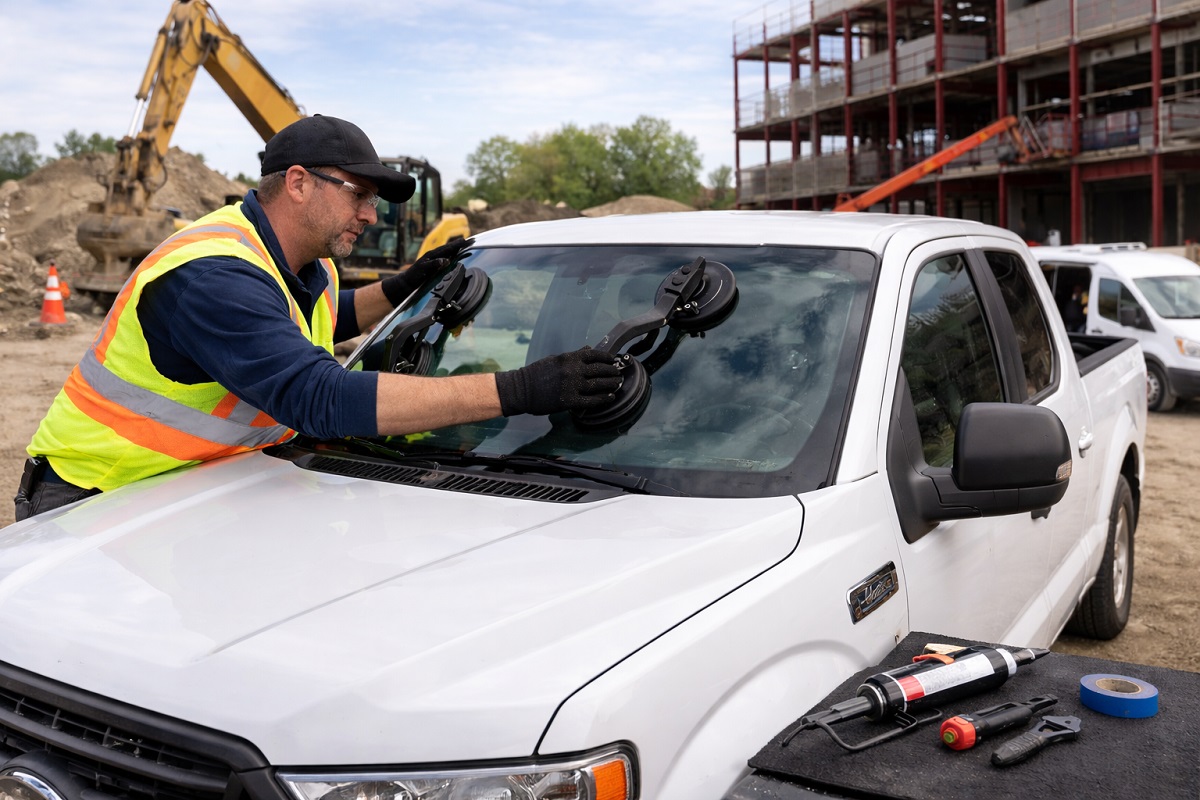
Handling windshield replacement on a job site requires careful planning, strict safety procedures, and the right tools to prevent downtime and protect workers. Whether you manage a construction fleet, operate heavy equipment, or supervise field technicians, job site windshield replacement presents unique challenges that demand a controlled, professional approach.
Heavy machinery, work trucks, cranes, loaders, and utility vehicles are constantly exposed to debris, gravel, falling materials, and harsh environmental conditions. A cracked or shattered windshield on a job site is not just an inconvenience. It is a safety risk, a compliance issue, and a potential liability.
Below is a detailed guide to managing windshield replacement on a job site efficiently and safely.
Assess the Damage Immediately
When a windshield is damaged on a job site, time is critical. Delaying repairs increases the risk of:
- Reduced driver visibility
- Compromised structural integrity
- OSHA safety violations
- Further cracking due to vibration and temperature changes
Perform a quick but thorough inspection.
Evaluate the Severity
Determine whether the damage requires immediate replacement or temporary stabilization. Large cracks, spiderweb fractures, edge damage, or complete shattering typically require full windshield replacement rather than repair.
Heavy equipment windshields often contribute to cabin structural strength. Operating machinery with compromised glass can put operators at serious risk.
Remove the Vehicle from Active Operation
If visibility is affected or the glass integrity is compromised, remove the vehicle from service immediately. Continuing operation can:
- Increase liability exposure
- Lead to worker injury
- Result in costly project delays
Safety must come first on any construction site or industrial environment.
Prioritize Job Site Safety During Replacement
Windshield replacement on a job site involves more hazards than a standard auto glass replacement in a shop setting.
Establish a Safe Work Area
Before beginning the replacement process:
- Block off the area around the vehicle
- Use cones or barriers to redirect traffic
- Ensure stable, level ground
- Confirm overhead clearance
Construction sites are active environments. Clear communication with supervisors and equipment operators is essential before starting.
Use Proper Personal Protective Equipment
Technicians should wear:
- Cut resistant gloves
- Safety glasses or face shields
- Hard hats when required
- Steel toe boots
- Long sleeves to protect from glass shards
Broken laminated glass can splinter and scatter. Protecting workers reduces injury risk and prevents job site incidents.
Choose the Right Windshield for the Equipment
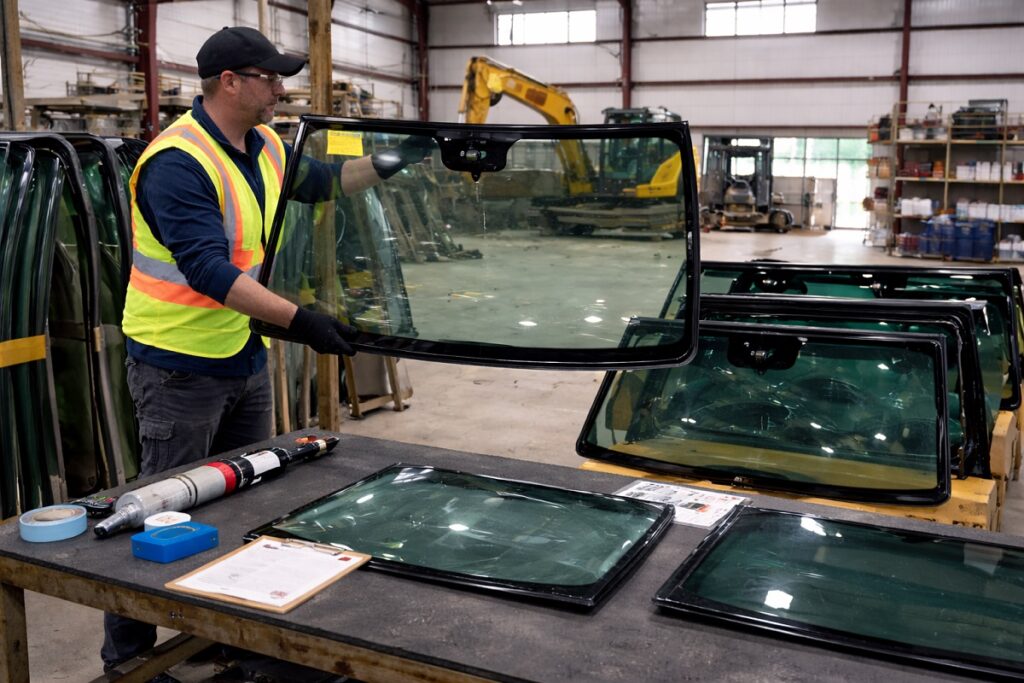
Not all windshields are interchangeable. Job site vehicles and heavy machinery require specific glass types designed for industrial use.
OEM vs Aftermarket Windshields
When replacing windshields on work trucks, forklifts, excavators, or loaders, consider:
- OEM windshields for precise fit and durability
- Laminated safety glass for impact resistance
- Tempered glass when required by equipment specifications
Using the correct windshield ensures proper sealing, structural integrity, and compliance with manufacturer standards.
Consider Specialty Glass Requirements
Some job site vehicles require:
- Heated windshields
- Tinted safety glass
- Acoustic glass for noise reduction
- Windshields with embedded sensors
Verify compatibility before ordering to avoid costly delays.
Follow Proper Removal Procedures
Improper removal can damage the vehicle frame or compromise the new installation.
Disconnect Power Systems
For modern fleet vehicles with ADAS calibration systems, cameras, or sensors, disconnect battery systems before removal.
This prevents electrical damage and ensures safe handling of connected components.
Remove Trim and Molding Carefully
Use appropriate tools to:
- Remove molding without bending
- Protect painted surfaces
- Avoid scratching the frame
Preserving the pinch weld area is critical for proper adhesion of the new windshield.
Cut Away Old Adhesive Cleanly
Professional auto glass technicians use specialized cutting tools to remove urethane adhesive without damaging the frame.
Avoid rushing this step. Damage to the bonding surface can weaken the installation and lead to leaks or structural issues.
Prepare the Surface for Installation
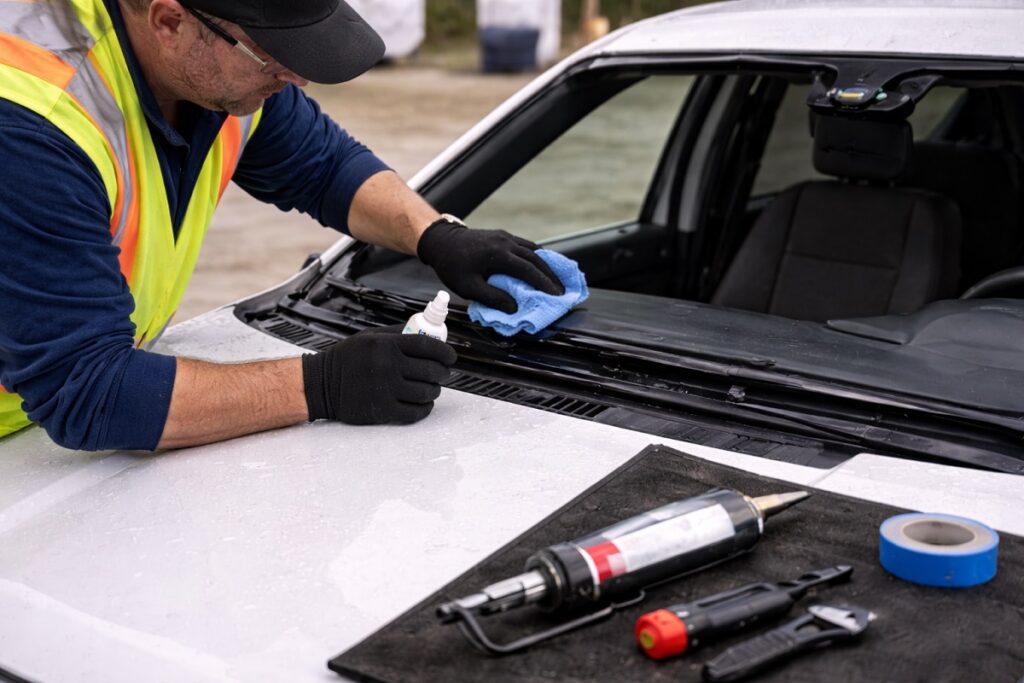
Surface preparation is one of the most important steps in windshield replacement on a job site.
Clean the Pinch Weld Thoroughly
Remove:
- Old urethane
- Dust
- Rust
- Debris from the job site
Construction environments generate contaminants that can interfere with adhesive bonding.
Address Rust Immediately
If corrosion is present:
- Sand and treat the area
- Apply primer as recommended
- Ensure a smooth bonding surface
Ignoring rust can compromise adhesion and reduce windshield lifespan.
Install the New Windshield Correctly
Proper installation directly affects safety and durability.
Apply High Quality Urethane Adhesive
Use industry approved automotive urethane designed for:
- Heavy equipment
- Commercial fleet vehicles
- Extreme weather conditions
Follow manufacturer curing time recommendations strictly.
Position the Windshield Precisely
Improper alignment can result in:
- Wind noise
- Water leaks
- Poor structural performance
- Sensor malfunction
Two technicians may be necessary for larger industrial windshields to ensure correct placement.
Allow Proper Cure Time
Safe drive away time varies depending on temperature, humidity, and adhesive type.
On a job site, there may be pressure to return equipment to service quickly. However, moving the vehicle before the adhesive fully cures can:
- Compromise seal integrity
- Cause windshield shifting
- Lead to air or water leaks
Plan for adequate downtime to protect both the equipment and workers.
Address ADAS Calibration if Applicable
Modern fleet vehicles often include Advanced Driver Assistance Systems.
If windshield replacement affects cameras or sensors, calibration is required to restore:
- Lane departure warning
- Collision avoidance systems
- Adaptive cruise control
Failure to recalibrate can result in system malfunction and serious safety risks.
For job site trucks and service vehicles equipped with these systems, always schedule professional recalibration after installation.
Manage Weather Conditions on the Job Site
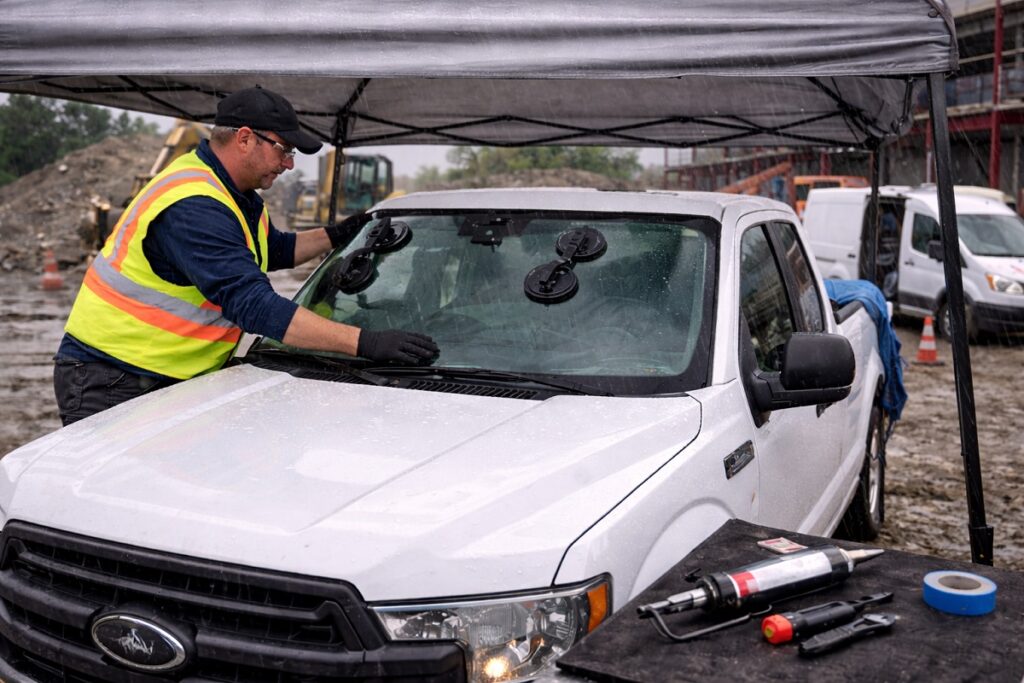
Job site windshield replacement must account for environmental factors.
Protect Against Dust and Debris
Wind and dust can contaminate bonding surfaces. Use:
- Portable tents
- Wind barriers
- Clean tarps
Maintaining a controlled environment improves installation quality.
Monitor Temperature
Cold weather can slow adhesive curing. Hot weather can affect handling time.
When possible:
- Store the windshield in a temperature controlled vehicle
- Use recommended primers
- Adjust scheduling based on weather forecasts
Proper planning reduces installation failures.
Document the Replacement Process
Fleet managers and site supervisors should maintain clear records of windshield replacement activities.
Documentation should include:
- Date of replacement
- Vehicle identification number
- Type of windshield installed
- Technician name
- Calibration details if applicable
Accurate records support warranty claims and help track maintenance schedules.
Work With a Professional Mobile Auto Glass Service
Many job sites benefit from hiring a mobile windshield replacement service that specializes in commercial fleet vehicles.
Benefits include:
- Reduced equipment downtime
- On site installation convenience
- Technicians experienced with heavy machinery
- Access to specialized industrial glass
Choosing an experienced provider ensures compliance with safety standards and proper installation practices.
Implement Preventive Measures to Reduce Future Damage
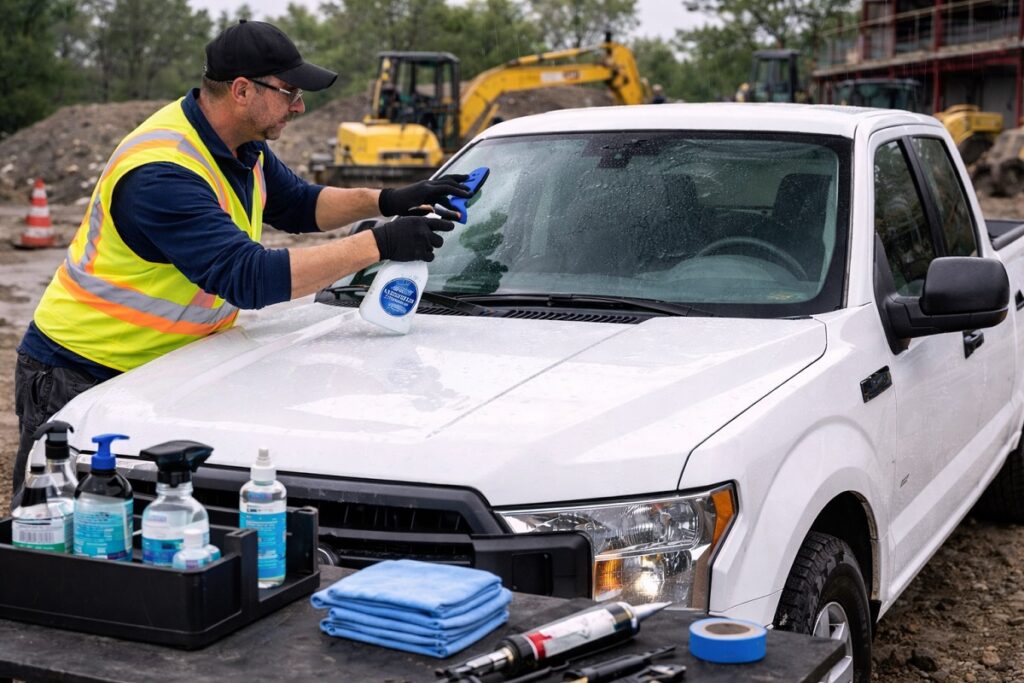
Windshield replacement on a job site can be costly. Preventive strategies help minimize repeat incidents.
Improve Equipment Positioning
Park vehicles away from:
- Active excavation areas
- Rock crushing operations
- Overhead material movement
Reducing exposure to debris lowers risk.
Train Operators on Safe Practices
Educate equipment operators to:
- Maintain safe following distances
- Avoid high speed travel on gravel
- Report chips immediately
Early repair of small chips can prevent full windshield replacement.
Understand Insurance and Liability Considerations
For construction companies and contractors, windshield damage may be covered under:
- Commercial auto insurance
- Equipment insurance policies
- Fleet coverage plans
Prompt reporting ensures smooth claims processing and reduces financial impact.
Verify policy details regarding on site glass damage to avoid surprises.
Schedule Regular Inspections
Routine inspection of fleet windshields helps catch small cracks before they spread.
Add windshield checks to:
- Daily equipment walkarounds
- Weekly fleet inspections
- Preventive maintenance schedules
Proactive maintenance reduces emergency replacements and improves job site safety.
Windshield replacement on a job site requires coordination, technical expertise, and strict adherence to safety protocols. From assessing damage and securing the area to proper installation and calibration, each step directly impacts equipment performance and worker safety.
By following best practices for commercial windshield replacement, using high quality materials, and partnering with experienced mobile auto glass professionals, construction companies and fleet managers can minimize downtime, reduce liability, and keep operations running efficiently.
Content reviewed and published by SLP AutoGlass Editorial Team.