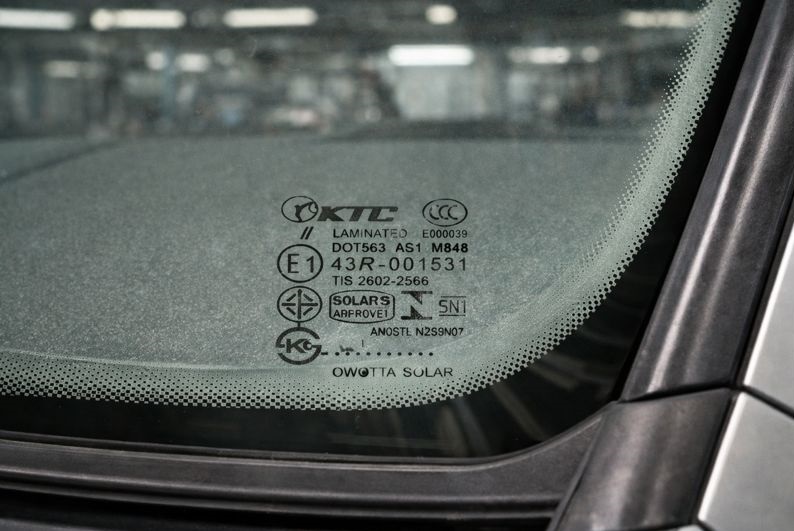
How to check for auto glass certification marks is an important skill for anyone replacing or repairing a windshield or vehicle window. Certification marks help verify that the auto glass meets established safety and quality standards, ensuring proper fit, durability, and visibility. Knowing where to look and how to read these markings allows vehicle owners to make informed decisions and avoid substandard or counterfeit glass.
Auto glass certification marks are typically subtle and permanently etched, yet they contain valuable information about compliance, manufacturer origin, and safety performance. Understanding these details can help confirm whether the installed glass meets regulatory and industry requirements.
Where Auto Glass Certification Marks Are Located
Certification marks are usually etched directly into the glass and are designed to remain visible throughout the life of the windshield or window. These markings are not stickers and cannot be removed without damaging the glass.
Common Placement Areas
Most auto glass certification marks are found in predictable locations, making them easier to identify once you know where to look.
- Lower corner of the windshield, often on the driver or passenger side
- Bottom edge of side windows
- Rear window near the lower corner
- Occasionally near the black frit or border area
The placement may vary by manufacturer, but the marks are almost always positioned where they do not obstruct the driver’s view.
Visibility Tips
Certification marks are sometimes difficult to see under certain lighting conditions. To make them easier to locate:
- View the glass from outside the vehicle
- Look at an angle rather than straight on
- Use natural light or a flashlight for clarity
- Clean the glass surface to remove dirt or glare
Understanding DOT Certification Marks
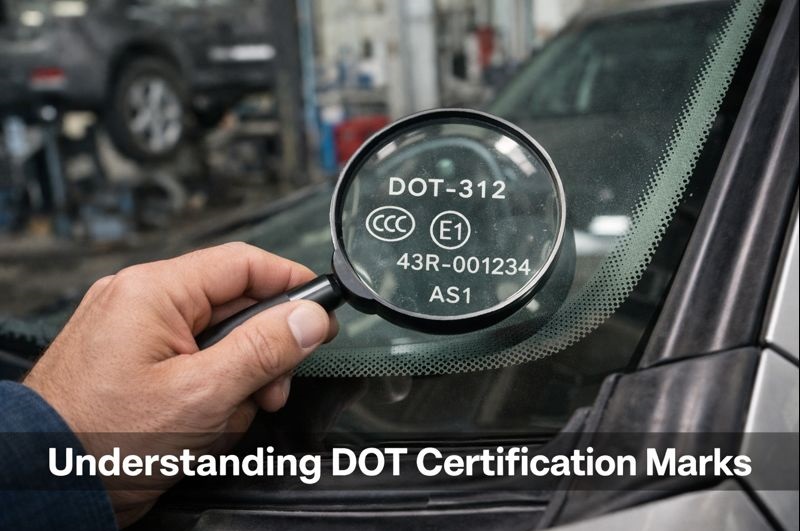
One of the most important auto glass certification marks to check is the DOT number. This mark indicates compliance with federal safety standards in the United States.
What the DOT Number Represents
The DOT marking shows that the glass meets Federal Motor Vehicle Safety Standards for glazing materials. It also identifies the manufacturer or fabricator of the glass.
A typical DOT marking includes:
- The letters DOT
- A number assigned to the manufacturer
- Additional symbols or codes depending on the glass type
This number can be cross referenced with official DOT manufacturer listings to confirm legitimacy.
Why the DOT Mark Matters
DOT certification helps ensure:
- Proper impact resistance
- Adequate optical clarity
- Safe shattering characteristics
- Compliance with safety regulations
If a windshield or window does not have a visible DOT mark, it may not meet legal safety requirements.
Manufacturer Logos and Brand Identifiers
Auto glass certification marks often include a manufacturer logo or brand name etched into the glass. This provides insight into who produced the glass and whether it matches original equipment standards.
Identifying OEM Versus Aftermarket Glass
Original equipment manufacturer glass typically displays the vehicle brand logo or the original glass supplier’s name. Aftermarket glass may have a different logo but should still include certification marks.
When checking manufacturer identifiers:
- Look for consistent branding and clean etching
- Verify that the logo aligns with known glass manufacturers
- Avoid glass with misspelled names or unclear markings
Matching Glass to Vehicle Specifications
Comparing the logo and markings on your current glass to the original factory glass can help determine if the replacement matches required specifications for thickness, tint, and curvature.
AS1, AS2, and AS3 Glass Markings
Auto glass certification marks often include AS codes that describe the glass type and light transmission properties.
Meaning of AS Codes
These markings are standardized and indicate how much light passes through the glass.
- AS1 glass allows the highest level of light transmission and is typically used for windshields
- AS2 glass allows slightly less light and is commonly found in side windows
- AS3 glass has reduced light transmission and is often used for privacy glass
Why AS Ratings Are Important
AS markings help ensure that the glass:
- Meets visibility requirements for driver safety
- Complies with local tint and glazing laws
- Is installed in the correct location on the vehicle
Incorrect AS ratings can result in visibility issues or legal compliance problems.
E Mark Certification for International Standards
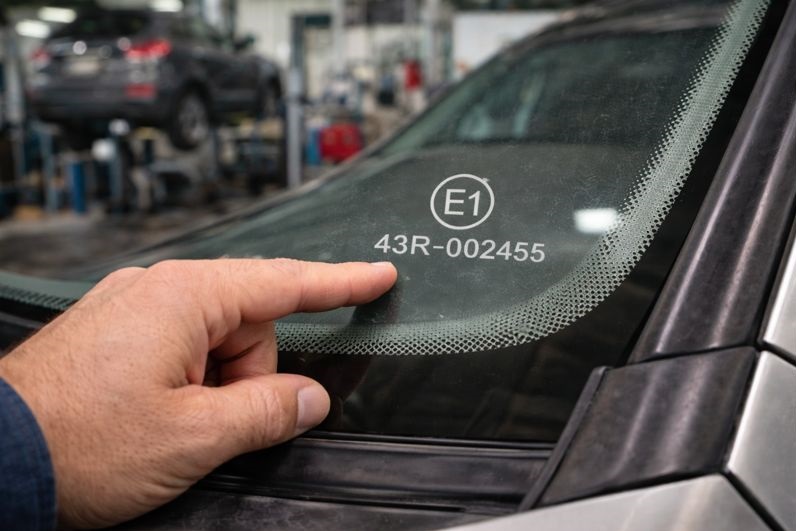
Vehicles manufactured or serviced outside the United States may feature E marks instead of DOT numbers. These marks indicate compliance with European safety standards.
How to Identify an E Mark
An E mark usually consists of:
- A capital E inside a circle or rectangle
- A number representing the country of certification
- Additional approval or regulation numbers
These markings are recognized internationally and serve a similar purpose to DOT certification.
Verifying E Mark Authenticity
To confirm the legitimacy of an E mark:
- Ensure the marking is permanently etched
- Check that the approval number format is consistent
- Compare the code with recognized international standards
Checking for Laminated and Tempered Glass Indicators
Auto glass certification marks also indicate whether the glass is laminated or tempered, which affects safety performance during impact.
Laminated Glass Markings
Laminated glass is commonly used for windshields and includes a plastic interlayer to prevent shattering.
Look for markings that indicate:
- Laminated or LAM
- Safety glass designation
- Compliance with impact resistance standards
Tempered Glass Markings
Tempered glass is typically used for side and rear windows. It shatters into small pieces when broken.
Certification marks for tempered glass often include:
- Tempered or T
- Safety glazing designation
- Applicable standard references
How to Spot Missing or Fake Certification Marks
Not all auto glass on the market meets certification standards. Knowing how to identify red flags can help avoid unsafe installations.
Warning Signs to Look For
Be cautious if you notice:
- No visible certification marks at all
- Etching that appears uneven or poorly finished
- Stickers instead of permanent markings
- Inconsistent fonts or symbols
Certified auto glass should always have clean, professionally etched markings.
What to Do If Marks Are Missing
If certification marks cannot be found:
- Ask the installer for documentation or proof of compliance
- Request confirmation of DOT or E mark certification
- Consider replacing the glass with a certified option
Verifying Certification After Installation
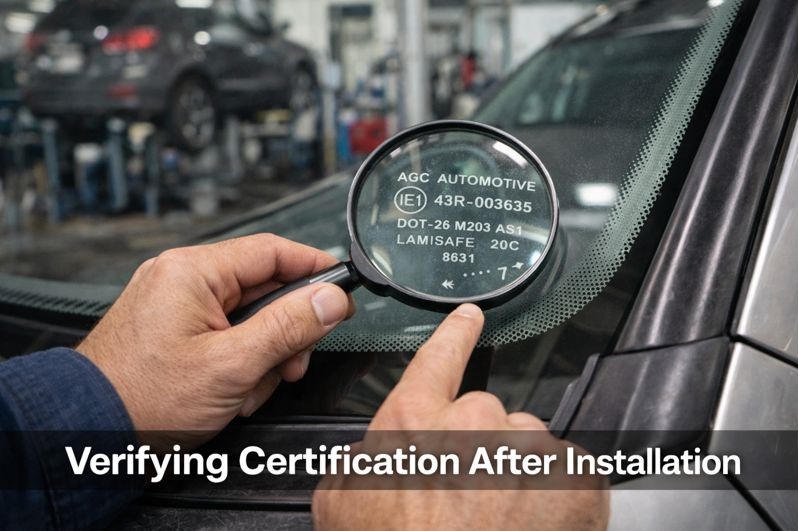
Checking certification marks should be done both before and after installation to ensure compliance.
Post Installation Inspection Tips
After installation:
- Inspect all glass surfaces for visible markings
- Compare markings to manufacturer specifications
- Confirm the glass type matches the vehicle location
Taking time to verify certification helps ensure long term safety and performance.
Keeping Records for Future Reference
Documenting certification details can be useful for:
- Insurance claims
- Vehicle resale
- Warranty or recall inquiries
Photos of certification marks can serve as proof of compliant installation.
Why Certification Marks Should Never Be Ignored
Auto glass certification marks provide essential insight into the quality, safety, and legality of the glass installed on your vehicle. They confirm that the glass meets required performance standards and has been tested for real world driving conditions. Checking these markings helps protect vehicle occupants, ensures proper visibility, and supports compliance with safety regulations. Making certification verification part of the glass replacement process leads to safer driving and greater peace of mind.
Content reviewed and published by SLP AutoGlass Editorial Team.