
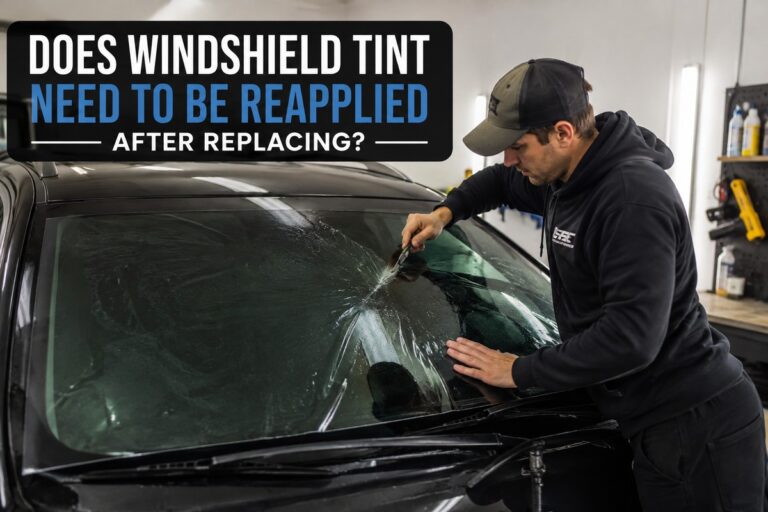
Does windshield tint need to be reapplied after replacing the windshield? In most cases, yes. If your previous windshield had aftermarket tint film installed on the inside surface of the glass, that tint does not transfer to the new windshield during replacement. A new windshield typically arrives without your existing aftermarket tint, which means a new film will need to be installed if you want the same level of tinting.
The exact situation depends on whether the tint was an aftermarket film or a feature built into the original glass. Understanding that distinction can help you plan your windshield replacement and avoid being surprised when the new glass looks different from the windshield that was removed.
Does Windshield Tint Stay on During Windshield Replacement?
Aftermarket windshield tint is physically attached to the windshield being removed. When an auto glass technician replaces a damaged windshield, the entire piece of glass is taken out of the vehicle, including any tint film attached to it.
The replacement windshield is a separate piece of glass. The tint film from the old windshield generally cannot simply be peeled off and installed on the replacement glass.
Trying to reuse old window tint can result in problems such as:
- Creases or wrinkles in the film
- Damaged adhesive
- Bubbles and uneven areas
- Contamination from dust or debris
- Reduced optical clarity
- Poor adhesion to the new windshield
- An inconsistent appearance
For these reasons, drivers who want their windshield tint restored should normally plan to have new tint film installed after the windshield replacement is completed.
Factory Glass Features and Aftermarket Windshield Tint Are Different
Not every windshield that appears tinted has aftermarket window film. Some windshields have factory glass characteristics, a shaded band near the top, or other features incorporated into the glass itself.
These features are part of the windshield rather than a removable film.
Aftermarket Tint Film
Aftermarket windshield tint is applied to the interior surface of the windshield. Because the film remains attached to the old glass when it is removed, it will need to be replaced separately.
If your windshield had ceramic tint, heat-rejecting film, UV-blocking film, or another aftermarket product, you should expect to purchase and install new film on the replacement windshield.
Factory Tint and Shaded Areas
Some replacement windshields are manufactured with a shade band or other glass characteristics designed to match the vehicle’s original specifications.
When arranging an auto glass replacement, it is helpful to mention any factory shading or special windshield features. The replacement glass should be selected according to the vehicle and the appropriate specifications rather than assuming aftermarket film can recreate every factory feature.
When Should Windshield Tint Be Reapplied After Replacement?
Windshield tint should not necessarily be installed immediately after the new windshield is put into the vehicle. The windshield installation materials need appropriate time to set, and your auto glass technician may provide specific instructions about what to avoid after replacement.
The appropriate timing can depend on:
- The adhesive used for the windshield installation
- Temperature and weather conditions
- The vehicle and windshield design
- Instructions from the auto glass installer
- Requirements of the tint installer
Before scheduling windshield tint installation, ask the auto glass company when it is safe to proceed. Following the recommended waiting period helps protect the new windshield installation.
Coordinate Your Auto Glass and Tint Appointments
If you know that you want to reapply windshield tint, consider planning both services before the old windshield is removed.
You can ask your auto glass technician when the vehicle will be ready for tint installation. You can then schedule the tint appointment accordingly instead of discovering afterward that another appointment is needed.
This is particularly useful if you rely on ceramic windshield tint or heat-rejection film and want to restore those benefits quickly.
Can Old Windshield Tint Be Transferred to New Glass?
Reusing windshield tint film is generally not a practical option. Window film is designed to adhere closely to the glass, and removing it can stretch, crease, contaminate, or otherwise damage the material.
Even if a large section of film appears intact after removal, its adhesive may no longer perform as intended.
Installing fresh windshield tint provides a cleaner application and gives the installer the opportunity to cut the film specifically for the dimensions and shape of the replacement windshield.
Will the New Windshield Look Different Without Tint?
It can. Drivers sometimes become accustomed to the appearance of a tinted windshield and notice a significant difference after auto glass replacement.
Without the previous aftermarket tint, you may notice:
- More visible sunlight entering the cabin
- A different appearance from inside the vehicle
- Increased glare in certain driving conditions
- Greater heat buildup depending on the previous film
- A difference between the windshield and other tinted windows
The difference may be particularly noticeable if your old windshield had high-quality ceramic window film designed to reduce infrared heat while maintaining relatively high visible light transmission.
If you preferred the appearance and performance of the previous tint, reapplying a comparable film can help restore those characteristics.
Should You Use the Same Tint on the Replacement Windshield?
You do not necessarily have to use the exact same windshield tint after replacement. A new windshield can be an opportunity to reconsider the film based on visibility, heat rejection, UV protection, appearance, and applicable tint laws.
If you were happy with the previous tint, using a similar product may provide the most familiar result.
If you were not satisfied with it, consider discussing alternatives with a professional tint installer.
Consider Tint Darkness Carefully
Windshield tint laws can be more restrictive than laws governing side and rear windows. Regulations may control how much of the windshield can be tinted, the darkness of the film, reflectivity, or where tint can be placed.
Before reapplying windshield tint, verify the current requirements where the vehicle is registered and driven.
A professional tint installer can also help you select an appropriate film, but vehicle owners should make sure the final installation complies with applicable laws.
Consider Heat-Rejecting Windshield Film
Darkness is not the only factor to consider when choosing replacement windshield tint.
Modern ceramic and heat-rejecting films may provide substantial solar heat and UV reduction without requiring an extremely dark appearance. This can be useful for drivers who want additional comfort while maintaining good windshield visibility.
When comparing films, consider characteristics such as:
- Visible light transmission
- UV rejection
- Infrared heat rejection
- Optical clarity
- Glare reduction
- Manufacturer warranty
- Compatibility with applicable tint regulations
Selecting windshield film based on overall performance rather than darkness alone can produce a better result.
What About a Tinted Strip at the Top of the Windshield?
A tint strip or sun strip across the upper portion of the windshield may also need to be replaced if it was made from aftermarket film.
Because the strip is attached to the old windshield, it leaves with the damaged glass during windshield replacement.
However, some windshields have a factory shade band incorporated into the glass. In that situation, the feature may be available as part of the appropriate replacement windshield.
Before your windshield replacement, identify whether the upper shaded area is aftermarket film or part of the glass. This can help ensure you know what to expect from the replacement.
Does Windshield Replacement Affect Ceramic Tint?
Yes, if the ceramic tint is an aftermarket film installed directly on the windshield.
Ceramic window tint does not become a permanent part of the windshield itself. When the glass is removed, the ceramic film is removed along with it. A replacement windshield therefore requires a new application if you want to restore the ceramic tint.
This is worth considering when estimating the total cost of replacing a tinted windshield. The windshield replacement and ceramic tint installation are typically separate services and may involve separate costs.
Can Tint Affect Windshield Cameras and Sensors?
Modern vehicles may have cameras, sensors, or other equipment positioned near or behind the windshield. These systems can support features such as lane departure warnings, forward collision alerts, automatic emergency braking, rain sensing, and other driver-assistance functions.
When replacing a windshield, selecting the correct glass and properly addressing advanced driver assistance system equipment is important.
Tint installation should also account for cameras, sensors, and other windshield-mounted technology. Film should not be installed in a way that interferes with equipment that requires a clear view through the glass.
Tell both your auto glass technician and tint installer about any windshield cameras or sensors, especially if you are considering a different tint product than the one previously installed.
What Should You Do Before Replacing a Tinted Windshield?
A little preparation can make the process easier, especially if you want the replacement windshield to look and perform similarly to the old one.
Before your appointment:
- Tell the auto glass company that the existing windshield has aftermarket tint.
- Identify the type of tint if you know it, such as ceramic or dyed film.
- Mention any factory shade band or special glass features.
- Ask whether the replacement windshield matches the required vehicle specifications.
- Ask about any cameras or ADAS equipment associated with the windshield.
- Find out when it will be appropriate to have new tint installed.
- Check local windshield tint regulations before choosing replacement film.
Taking these steps helps you coordinate windshield replacement and tint installation without unnecessarily delaying either service.
Does Insurance Cover Reapplying Windshield Tint?
Coverage varies by insurance company, policy, and the circumstances of the windshield damage.
A glass claim that pays for windshield replacement does not automatically mean that aftermarket tint will be covered. Some policies may address aftermarket additions differently, while others may limit or exclude coverage.
If insurance is paying for the windshield replacement, ask specifically whether the policy covers replacing professionally installed windshield tint. If you have documentation or a receipt from the previous tint installation, keep it available in case the insurer requests proof of the aftermarket upgrade.
Do not assume the cost of new tint is included in the windshield replacement estimate unless it is specifically listed.
What Happens If You Do Not Reapply the Tint?
Reapplying aftermarket windshield tint is generally a choice unless a particular feature is needed for another reason. The replacement windshield can still function normally without reinstalling the aftermarket film, provided the correct windshield has been installed for the vehicle.
However, the driving experience may feel different.
If your previous tint reduced heat or glare, you may notice the difference relatively quickly. The vehicle’s interior may also appear brighter, particularly if the side and rear windows remain tinted.
Some drivers choose to leave the new windshield untinted, while others have new film installed to restore the appearance and performance they had before the replacement.
Make Windshield Tint Part of Your Replacement Plan
If your windshield has aftermarket tint, plan on having the tint reapplied after windshield replacement rather than expecting the existing film to transfer to the new glass. The old film normally stays with the windshield being removed, while the replacement glass starts without that aftermarket application.
Before replacing a tinted windshield, tell your auto glass technician about the existing tint, factory shading, cameras, sensors, and other windshield features. After installation, follow the recommended waiting period before having new film applied.
Planning for both windshield replacement and windshield tint reapplication can help you restore the visibility, appearance, glare reduction, and heat-rejection performance you prefer while ensuring the new glass is properly installed for your vehicle.
Content reviewed and published by SLP AutoGlass Editorial Team.