
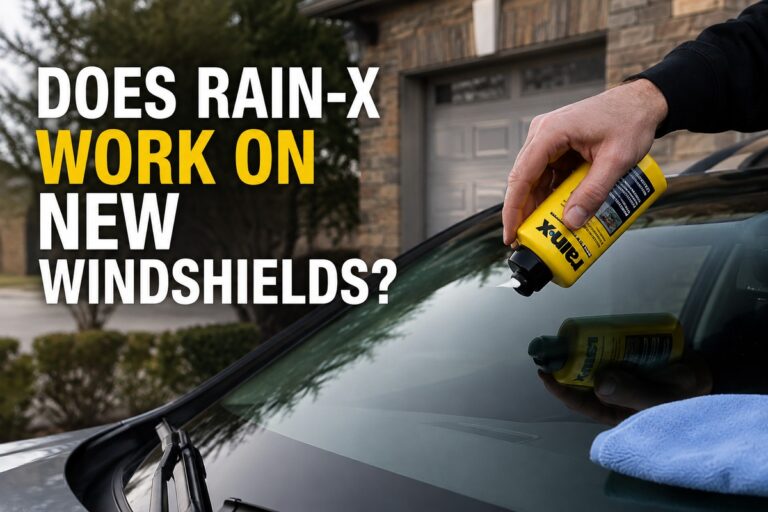
Does Rain-X work on new windshields? Yes, Rain-X can work effectively on a new windshield by helping water bead up and roll off the glass, but timing and proper application are important. A newly installed windshield may have residue from manufacturing, installation, adhesives, cleaners, or handling that should be removed before applying a water-repellent windshield treatment.
For drivers considering Rain-X after a windshield replacement, the main concerns are whether it is safe for the new auto glass, how soon it can be applied, and whether it will affect the windshield installation. Understanding these factors can help you get the benefits of a rain-repellent coating without interfering with your newly installed windshield.
Can You Put Rain-X on a New Windshield?
In most cases, Rain-X can be applied to a new windshield once the glass is properly cleaned and the windshield replacement has had sufficient time to settle.
Rain-X is applied to the exterior glass surface. Windshield adhesive, on the other hand, is located around the perimeter where the windshield is bonded to the vehicle. A properly applied glass treatment should not need to come into contact with the urethane adhesive or windshield molding.
The bigger consideration immediately after windshield replacement is allowing the installation to cure correctly. Your auto glass technician may provide a safe drive-away time and specific instructions about washing the vehicle, removing retention tape, or placing pressure on the new windshield.
Follow those instructions before applying products around the newly installed glass.
How Rain-X Performs on New Auto Glass
New windshield glass provides a smooth surface for a water-repellent treatment, provided that surface is completely clean.
Once properly applied, Rain-X creates a hydrophobic effect that causes rainwater to form beads instead of spreading across the windshield. As the vehicle moves, airflow can help push those water droplets away.
Drivers may notice several benefits:
- Rain beads more readily on the windshield
- Water can move off the glass faster while driving
- Visibility during rain may improve
- Snow, ice, and road spray may be easier to remove
- Water spots can be easier to manage when the coating is maintained properly
The results depend heavily on windshield preparation and application. Even a brand-new windshield should be thoroughly cleaned before applying a rain-repellent coating.
How Soon Can You Apply Rain-X After Windshield Replacement?
There is no single waiting period that applies to every windshield installation.
The urethane used to install a windshield requires time to reach the appropriate strength. Cure and safe drive-away times can vary based on the adhesive, temperature, humidity, vehicle, and installation conditions.
Follow the Auto Glass Technician’s Instructions First
Before applying Rain-X to a replacement windshield, follow the aftercare instructions provided by the auto glass company.
Your technician may recommend temporarily avoiding certain activities after installation, such as:
- High-pressure car washes
- Removing retention tape too early
- Applying unnecessary pressure around the windshield edges
- Disturbing exterior moldings
- Using products near uncured adhesive
If you are uncertain whether enough time has passed, ask the windshield installer before applying Rain-X or another glass treatment.
Waiting a little longer is preferable to accidentally interfering with a windshield that is still curing.
Should You Clean a Brand-New Windshield Before Applying Rain-X?
Yes. New does not necessarily mean completely clean.
A replacement windshield may have fingerprints, dust, packaging residue, adhesive residue, cleaning-product film, or contaminants from transportation and installation. Applying Rain-X over contamination can prevent the product from bonding evenly to the glass.
Preparing the Windshield
Start with a clean and dry windshield. Use an automotive glass cleaner that does not leave a heavy residue behind.
Pay particular attention to oily areas, fingerprints, and streaks. The windshield should feel smooth and look clear before the water-repellent treatment is applied.
For the best results:
- Work on cool glass rather than a windshield that has been sitting in direct sunlight
- Clean the entire exterior windshield thoroughly
- Use clean microfiber towels
- Allow the glass to dry before application
- Avoid getting the treatment on surrounding trim or freshly installed components
- Follow the product manufacturer’s application directions
Good surface preparation can make a significant difference in how evenly Rain-X performs.
Can Rain-X Damage a New Windshield?
When used as directed on appropriate automotive glass, Rain-X should not damage a standard new windshield simply because the windshield is new.
The glass itself is designed to withstand normal automotive glass cleaners and appropriate windshield treatments. Problems are more likely to come from improper application, contaminated glass, worn windshield wipers, or allowing products to contact surfaces for which they were not intended.
Be Careful Around the Windshield Edges
After a windshield replacement, extra care around the perimeter is sensible.
Avoid aggressively rubbing the moldings or applying excessive amounts of liquid around the edges immediately after installation. You also should not attempt to lift, move, or clean underneath moldings while the windshield installation is still settling.
If the windshield was recently replaced, following your installer’s aftercare recommendations should take priority over applying any aftermarket glass treatment.
Will Rain-X Affect Windshield Adhesive?
Rain-X applied normally to the exterior viewing surface of the windshield should not require contact with the urethane adhesive that bonds the glass to the vehicle.
However, this is another reason to avoid applying excessive amounts of product around the windshield perimeter immediately after replacement.
Windshield urethane plays an important structural role in keeping the glass properly bonded to the vehicle. It is not an area where cleaners, coatings, or other chemicals should be intentionally applied.
Keep Rain-X on the glass surface where it is intended to be used.
Can Rain-X Cause Windshield Wiper Chatter?
Some drivers experience wiper chatter, skipping, hazing, or streaking after applying a water-repellent windshield treatment. This does not necessarily mean there is a problem with the new windshield.
The issue may be related to the coating, windshield preparation, application technique, or wiper blades.
Check the Wiper Blades After a Windshield Replacement
A new windshield combined with old or contaminated wiper blades can produce disappointing results.
Wiper blades collect dirt, oils, road grime, wax, and other contaminants over time. Those materials can transfer onto clean replacement glass.
If you experience wiper chatter or streaking after applying Rain-X, check for:
- Worn or cracked windshield wiper blades
- Dirty rubber blade surfaces
- Uneven Rain-X application
- Excess product left on the glass
- Residue from previous cleaners or coatings
- Contamination on the windshield
Cleaning or replacing worn wiper blades can often improve windshield performance.
Does Rain-X Help Visibility in Heavy Rain?
The primary reason drivers apply Rain-X to their windshields is improved water repellency.
When rain hits treated glass, it tends to collect into beads rather than forming a continuous sheet of water. At sufficient driving speeds, airflow can help move those beads upward and away from the driver’s viewing area.
This can make a noticeable difference during highway driving in rainy conditions.
Rain-X does not replace functioning windshield wipers, however. Your windshield wipers and washer system should remain in good condition regardless of whether you use a hydrophobic windshield coating.
How Long Does Rain-X Last on a New Windshield?
Rain-X does not permanently bond to a windshield. The treatment gradually wears away and eventually needs to be reapplied.
How quickly that happens depends on driving and environmental conditions.
Frequent rain, windshield washer use, wiper activity, car washing, road grime, snow, ice, and exposure to the elements can all affect the lifespan of a windshield coating.
You may notice that it is time to reapply when water stops forming distinct beads or no longer moves off the windshield as easily.
Can Rain-X Be Used After Windshield Chip Repair?
A repaired windshield chip is different from a full windshield replacement, but similar caution is appropriate.
Windshield repair resin needs to be properly cured as part of the repair process. Once the repair has been completed and the technician has cleared the vehicle for normal use, a water-repellent windshield treatment can generally be considered for the exterior glass.
If a chip has not yet been repaired, it is better to have the damage inspected before applying products over or around it.
Keeping the damaged area clean and uncontaminated can help the technician properly evaluate and repair the windshield chip.
Rain-X on New Windshields With Cameras and Sensors
Many modern vehicles have Advanced Driver Assistance Systems, commonly called ADAS, that rely on cameras or sensors positioned near or behind the windshield.
These systems may support features such as:
- Lane departure warnings
- Lane keeping assistance
- Forward collision warnings
- Automatic emergency braking
- Traffic sign recognition
- Adaptive driving features
After certain windshield replacements, the vehicle’s forward-facing camera may require ADAS calibration.
Applying Rain-X to the exterior windshield is separate from camera calibration, but drivers should make sure the windshield replacement and any required calibration procedures have been completed correctly before focusing on optional glass treatments.
A clear windshield is important for both the driver and vehicle systems that rely on an unobstructed view through the glass.
When Should You Avoid Applying Rain-X to a New Windshield?
There are situations when it makes sense to wait.
Avoid applying Rain-X immediately if the windshield installer has instructed you not to clean or disturb the glass yet. You should also wait if there is visible installation residue that requires professional attention or if you are unsure whether the windshield adhesive has had sufficient curing time.
You may also want to hold off when:
- Retention tape is still in place
- Windshield molding appears loose
- You notice a possible water leak
- The windshield makes unusual noises while driving
- There are visible gaps around the installation
- The glass appears improperly positioned
- An ADAS calibration still needs to be completed
Potential installation problems should be addressed by the auto glass company before adding coatings or performing extensive cleaning.
How to Get Better Results From Rain-X on a Replacement Windshield
A good Rain-X application starts with preparation rather than using more product.
Applying too much can make buffing difficult and may contribute to haze or streaking. A thin, even application on clean glass generally produces better results.
Keep the Windshield and Wipers Clean
Maintaining the windshield after treatment is equally important.
Road oils, insects, dirt, tree sap, mineral deposits, and other contaminants can reduce visibility even when the windshield has a water-repellent coating.
Regularly inspect your windshield and wiper blades. Replace wipers when they become worn, cracked, noisy, or unable to clear water effectively.
Reapply Only When Needed
More frequent application is not necessarily better.
Monitor how water behaves on the windshield. When the beading effect noticeably decreases, clean the glass and reapply the product according to its directions.
This helps maintain consistent performance without unnecessarily layering excessive product on the windshield.
Rain-X Does Work on New Windshields When Applied Correctly
Rain-X can work well on a new windshield and can provide useful water-repellent properties during rainy driving conditions. The key is not simply whether the product can be used, but when and how it is applied after a windshield replacement.
Allow the windshield installation to cure according to your auto glass technician’s instructions, clean the new glass thoroughly, keep the product away from the windshield adhesive and surrounding components, and apply it according to the manufacturer’s directions.
If you have recently had a windshield replaced and are unsure whether it is ready for Rain-X, ask your auto glass technician first. Proper windshield installation and curing should always come before applying an optional glass treatment. Once the replacement windshield is ready for normal care, Rain-X can be a useful addition for drivers looking for improved water beading and clearer visibility in wet weather.
Content reviewed and published by SLP AutoGlass Editorial Team.