
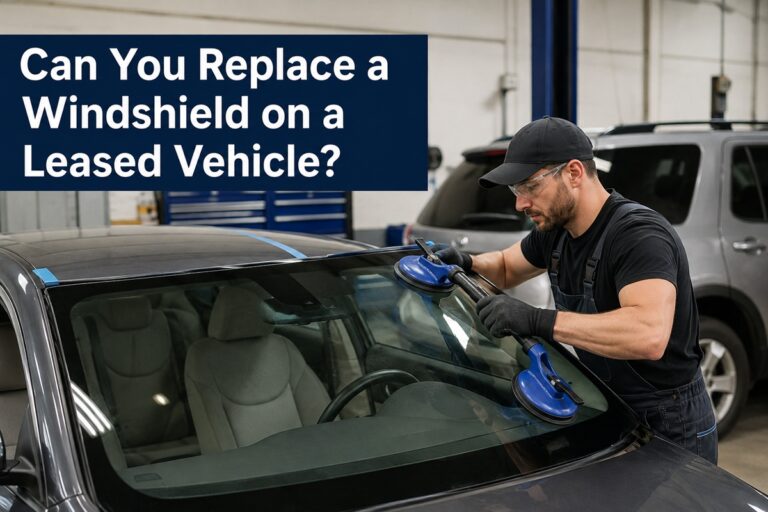
Can you replace a windshield on a leased vehicle? Yes, you can replace a windshield on a leased vehicle, and in many situations, it is necessary to maintain the vehicle in good condition throughout the lease term. Whether your windshield has a small crack that has spread or suffered major damage from road debris, replacing it promptly can help you avoid safety risks, lease-end penalties, and additional repair costs. Understanding your lease agreement, insurance coverage, and replacement options can make the process much easier.
A damaged windshield is more than just a cosmetic issue. It plays an important role in vehicle safety, structural integrity, and visibility. If you lease your vehicle, replacing a damaged windshield with a quality replacement before returning the vehicle is often one of the smartest decisions you can make.
Does a Lease Allow Windshield Replacement?
Most vehicle lease agreements allow you to replace a damaged windshield. In fact, leasing companies expect drivers to maintain the vehicle throughout the lease period.
A windshield replacement is considered routine vehicle maintenance when damage cannot be safely repaired. Leasing companies generally require the replacement to meet manufacturer standards and restore the vehicle to its original condition.
Before scheduling service, it is always a good idea to review your lease agreement. Some leasing companies include specific requirements regarding replacement parts or installation standards.
Why You Should Not Ignore a Damaged Windshield
Driving with a cracked or severely chipped windshield creates several problems beyond appearance.
A damaged windshield can:
- Reduce driver visibility.
- Weaken the structural strength of the vehicle.
- Affect proper airbag deployment.
- Allow cracks to spread due to temperature changes or road vibrations.
- Result in lease-end damage charges.
Small chips may sometimes be repaired, but once damage becomes too large or reaches the driver’s line of sight, windshield replacement is usually the safest option.
Will the Leasing Company Require OEM Glass?
One of the most common questions about leased vehicles is whether original equipment manufacturer glass is required.
The answer depends on your lease agreement and the leasing company.
Some leases specifically require OEM windshield replacement, while others accept high quality aftermarket auto glass that meets federal safety standards. Many insurance companies also approve aftermarket glass when it provides the same fit, performance, and safety as the original windshield.
If your lease agreement does not specify OEM glass, ask both your leasing company and your auto glass provider before scheduling the replacement.
Should You Notify the Leasing Company?
In many cases, you do not need prior approval for windshield replacement, especially if the repair falls under normal vehicle maintenance.
However, notifying the leasing company may be beneficial if:
- Your lease contains repair restrictions.
- Insurance is covering the replacement.
- The vehicle has advanced driver assistance systems that require calibration.
- You are close to returning the leased vehicle.
A quick phone call can eliminate uncertainty and help prevent lease-end disputes.
Insurance Coverage for Windshield Replacement
Insurance often helps reduce or eliminate the cost of replacing a windshield on a leased vehicle.
Coverage depends on your policy.
Comprehensive Coverage
If you carry comprehensive insurance, windshield replacement may be covered after any applicable deductible.
Comprehensive coverage generally applies to damage caused by:
- Flying rocks
- Road debris
- Storm damage
- Falling tree branches
- Vandalism
- Animal impacts
Full Glass Coverage
Some insurance policies include separate glass coverage.
With full glass coverage, your windshield replacement may be covered with little or no out-of-pocket expense, depending on your insurer and state regulations.
Always contact your insurance company before scheduling service to understand your benefits.
What Happens if You Return a Leased Vehicle With a Cracked Windshield?
Returning a leased vehicle with windshield damage can result in additional charges.
Most leasing companies inspect vehicles carefully during the return process. A cracked windshield is commonly classified as excess wear and damage if it exceeds acceptable guidelines.
Potential consequences include:
- Windshield replacement fees.
- Administrative charges.
- Reduced security deposit refunds.
- Additional repair costs added to your final lease bill.
Replacing the windshield before returning the vehicle often costs less than paying the leasing company’s repair charges.
Can a Windshield Be Repaired Instead of Replaced?
Not every damaged windshield requires replacement.
Repair may be possible when:
- The chip is small.
- Damage is outside the driver’s direct line of sight.
- The crack has not spread significantly.
- The damage does not reach the windshield edge.
Replacement is generally recommended when the crack is extensive, affects visibility, or compromises the windshield’s structural integrity.
An experienced auto glass technician can inspect the damage and recommend the safest solution.
Windshield Replacement and ADAS Calibration
Many leased vehicles include Advanced Driver Assistance Systems that rely on cameras mounted behind the windshield.
These systems may include:
- Lane departure warning
- Forward collision warning
- Adaptive cruise control
- Automatic emergency braking
- Traffic sign recognition
After windshield replacement, these safety systems often require calibration to ensure they function correctly.
Failing to calibrate these systems can reduce their accuracy and may create safety concerns. Choosing an auto glass company that performs ADAS calibration helps restore your vehicle to manufacturer specifications.
Choosing the Right Auto Glass Company
Selecting an experienced auto glass company is especially important when replacing a windshield on a leased vehicle.
Look for a company that offers:
- Certified auto glass technicians.
- High quality replacement glass.
- Proper installation procedures.
- ADAS calibration when required.
- Assistance with insurance claims.
- Workmanship warranties.
Professional installation helps ensure your leased vehicle meets safety standards and lease return requirements.
Common Mistakes to Avoid
Replacing a windshield on a leased vehicle is usually straightforward, but several mistakes can create unnecessary expenses.
Avoid these common issues:
Waiting Too Long
Small chips can quickly become large cracks. Early replacement or repair often prevents more costly damage.
Choosing the Lowest Price Without Considering Quality
Low quality glass or improper installation can create leaks, wind noise, or safety issues.
Skipping ADAS Calibration
Modern safety features depend on accurate camera positioning. Calibration should never be overlooked when required.
Ignoring Your Lease Agreement
Every leasing company has different standards. Reviewing your lease before scheduling replacement can prevent unexpected charges later.
Preparing for Lease Return After Windshield Replacement
If your lease is ending soon, inspect your vehicle several weeks before returning it.
Check for:
- Windshield chips or cracks.
- Proper windshield installation.
- Working rain sensors.
- Properly functioning driver assistance systems.
- Clean interior and exterior condition.
Addressing these items before your inspection gives you more control over repair costs and reduces the chance of lease-end surprises.
Is Replacing a Windshield on a Leased Vehicle Worth It?
Replacing a damaged windshield on a leased vehicle is almost always worth doing. A professionally installed replacement restores visibility, protects the structural integrity of the vehicle, and helps ensure compliance with your lease agreement.
Delaying replacement may increase repair costs, create safety concerns, and lead to expensive lease-end penalties. Working with an experienced auto glass company that uses quality materials and follows proper installation procedures gives you confidence that your leased vehicle is ready for everyday driving and eventual return.
Content reviewed and published by SLP AutoGlass Editorial Team.