
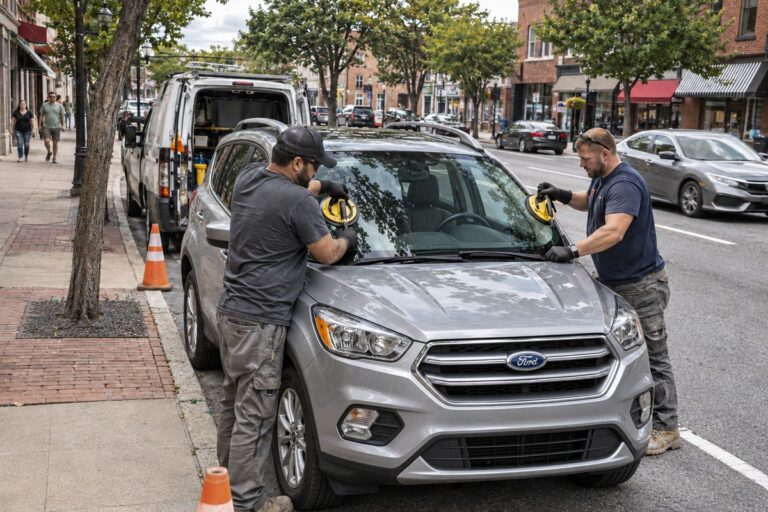
Can you replace a windshield on a busy street? In most cases, yes. A professional technician can complete a windshield replacement on a busy street as long as the vehicle is parked legally, the work area is safe, and the weather allows the urethane adhesive to bond properly. Many drivers assume the job requires a quiet driveway or a shop bay, but mobile auto glass replacement is built for real-world locations like apartment curbs, downtown parking spots, and office lots.
That said, a busy street adds variables that a good installer plans for. Traffic, parking rules, vibration, and dust all affect how smoothly the job goes. Here is what you should know before you schedule.
Is Windshield Replacement Possible on a Busy Street?
Short Answer for Drivers
Yes, it is possible. Mobile windshield replacement is one of the most common ways drivers get glass repaired, and technicians regularly work curbside in city neighborhoods. The deciding factor is not how busy the street is. It is whether the technician can work safely and keep the glass bond clean and undisturbed.
When a Technician May Recommend a Different Location
Sometimes the best choice is to move the job. A technician may suggest a different spot if:
- The vehicle is parked in a lane of active traffic or on a narrow shoulder
- There is no room to open the doors and remove the old glass safely
- Heavy construction dust or road debris is blowing across the work area
- Rain, snow, or standing water cannot be kept off the bonding surface
If any of these apply, moving the car to a nearby side street, parking garage, or shop is a simple fix.
Safety Considerations for Roadside Windshield Replacement
Protecting the Technician and the Vehicle
Working next to moving traffic requires awareness. Technicians typically position the vehicle so that the work happens on the curb side, away from passing cars. Hazard lights, cones, and high visibility clothing are common tools for marking the work zone.
A large windshield can weigh 20 to 30 pounds or more, and it must be lifted, aligned, and set precisely. A stable work area keeps the glass from shifting during setting.
Why Curbside Placement Matters
When possible, park the vehicle against a curb with extra space around it. This gives the technician room to carry the glass, use suction cups, and clean the pinch weld (the metal frame the glass bonds to) without stepping into the roadway.
If you live on a busy street, consider asking a neighbor to hold a spot, or choose a time of day with lighter traffic.
Parking Rules and Permits to Check First
Local Parking Restrictions
Before booking, check posted signs for time limits, street sweeping hours, and permit zones. A windshield replacement typically takes about 60 to 90 minutes of labor, plus a waiting period afterward, so a 30 minute meter will not be enough.
Metered Spots and Loading Zones
If you are on a metered street, plan to feed the meter through the full appointment and the cure time. Avoid loading zones and no-stopping areas, since a citation or tow can interrupt the job and leave the adhesive unsupported.
How Traffic Vibration Affects the Adhesive Bond
What Happens During Curing
Modern windshields are held in place with polyurethane adhesive that cures over time. Until it reaches a minimum strength, the glass depends on the bead of adhesive to stay positioned. Passing buses, trucks, and heavy vehicles can create vibration, but a properly set windshield on a parked car is rarely affected by normal street noise.
The larger risk is what happens after the install. Slamming doors, driving too soon, or hitting a pothole before the adhesive sets can weaken the seal.
Safe Drive-Away Time
Safe drive-away time is the period you must wait before driving. Many fast-curing urethanes allow driving in as little as 30 minutes to 1 hour under proper conditions, but the exact time depends on the adhesive brand, temperature, and humidity. Your installer should tell you the specific time for the product used.
On a busy street, this waiting period matters. You will need to stay legally parked, so make sure the spot works for the full wait.
Weather, Dust, and Debris Concerns
Temperature and Humidity
Urethane adhesives are sensitive to conditions. Cold weather slows curing, while high humidity can speed it up. Most installers aim to work in moderate temperatures, and many will reschedule or move the vehicle indoors during extreme cold or heat.
Keeping the Bond Clean
Dust, oil, and road grime can interfere with adhesion. On a busy street, passing vehicles can kick up particles, so technicians take extra care to clean and prime the pinch weld before laying the adhesive bead. Rain is another concern, since moisture on the bonding surface can lead to leaks or a weak seal. A pop-up canopy or a covered parking spot can help in light weather.
Why a Proper Windshield Installation Matters
Structural Strength
Your windshield is more than a window. It is commonly cited as providing up to 60 percent of a vehicle’s cabin structural strength in a rollover crash, and it supports the roof if the car flips.
Airbag Performance
The passenger side airbag often deploys against the windshield and relies on it to direct the bag toward the occupant. A poor bond can allow the glass to pop out during deployment, which reduces the airbag’s effectiveness. This is why a rushed install on a hectic street is never worth the risk.
ADAS Calibration After Windshield Replacement
Why Calibration Is Often Required
Many newer vehicles have cameras mounted behind the windshield for lane departure warning, automatic emergency braking, and adaptive cruise control. After replacement, these systems often need recalibration so they read the road accurately.
Static vs. Dynamic Calibration
- Static calibration is done in a controlled space with targets and special equipment, so it usually happens at a shop
- Dynamic calibration is done by driving the vehicle at set speeds on well marked roads
If your vehicle needs calibration, ask your installer whether it can be done on site or if the car must be brought in. A busy street is not an ideal place for either method.
How to Prepare Your Vehicle for a Street Side Install
Before the Technician Arrives
A little preparation makes the appointment faster and safer:
- Park in a legal spot with space on both sides of the vehicle
- Remove toll tags, dash cams, and parking permits from the windshield
- Clear items from the dashboard and front seats
- Confirm the street cleaning and meter schedule
What to Expect During the Appointment
The technician removes the old glass, cleans the frame, applies primer and adhesive, and sets the new windshield. You will usually be asked to keep the doors closed gently, avoid washing the car, and leave the retention tape in place for a day or as directed.
Ask your installer about the adhesive used, the safe drive-away time, and the warranty on workmanship.
When a Shop Visit Is the Better Choice
Situations That Favor In-Shop Service
Mobile service is convenient, but some jobs are better handled indoors. A shop visit may be the smarter option if your vehicle needs ADAS calibration, if the weather is severe, or if the street is too tight or too busy to work safely.
Weighing Convenience and Control
A controlled environment gives the technician better lighting, cleaner air, and steady temperatures. If your schedule allows, a shop appointment removes most of the street side variables.
So, can you replace a windshield on a busy street? Yes, when the location is safe, the parking is legal, and the weather cooperates. If you are unsure whether your street qualifies, call SLP Autoglass and describe your location. A quick conversation can help you choose the safest and most convenient option for your vehicle.